
Most project management advice isn’t built for marketers. It’s vague, it’s idealistic, and it doesn’t work when you’re buried in marketing assets, Slack messages, and client feedback at 7 PM.
If that’s pretty much the madness you experience managing marketing projects, we’ve got six strategies to help you bring some order to the chaos. These aren’t theoretical frameworks pulled from business textbooks. They’re practical steps your team can actually use to stay aligned, meet deadlines, and keep clients happy.
6 Project Management Strategies That Actually Make a Difference
1. Clearly Define Roles and Responsibilities
The first thing you have to do when it comes to managing client projects is to define clear roles and responsibilities. Without this, tasks get repeated or forgotten, and deadlines get pushed while everyone waits for someone else to take action.
Start by mapping out your typical campaign workflow from planning to publishing. Then assign clear owners to each part. This doesn’t have to be complicated. A shared document or simple RACI chart can go a long way in clarifying expectations.
Here are some common roles to define early:
- Campaign lead – keeps the project on track
- Content creator – produces copy or design assets
- Coordinator – manages scheduling and task updates
- Client contact – handles client-facing communication
- Client – provides input, feedback, and approves content
Setting clear roles up front helps your team stay focused and reduces the chances of confusion or miscommunication later.
2. Break Down Large Projects Into Manageable Tasks
Big marketing campaigns are harder to manage when you only see the finish line and not the steps to get there. One of the most widely accepted project planning techniques is the Work Breakdown Structure (WBS). This method focuses on breaking a project into smaller components, so each part can be clearly identified, estimated, and scheduled. The WBS is considered a cornerstone of effective project planning because it improves clarity and accountability across tasks.
Without breaking work into manageable pieces, you risk missing steps, overlooking dependencies, and losing track of priorities. Start by identifying major milestones, then create subtasks for each phase with owners and due dates.
3. Use a Prioritization Framework to Stay Focused
For successful project execution, it’s just as important to prioritize tasks as it is to assign them. When you’re managing client campaigns, last-minute requests, and content deadlines all at once, it’s easy to lose focus.
A simple framework can help you stay in control. The Eisenhower Matrix is one option. It separates tasks into four categories:
- Urgent and important – do it now
- Important but not urgent – schedule it
- Urgent but not important – delegate it
- Neither – drop it
You can also try the MoSCoW Method, which groups tasks into Must-haves, Should-haves, Could-haves, and Won’t-haves. It’s especially useful when you’re negotiating priorities with clients or internal teams.
4. Use Tools Designed for Project Management
No team can run client projects effectively without the right tools. There are plenty of generic project management tools on the market that can help you automate certain aspects of your project workflows. Here are some of the options👇
| Tool | Best for | Key feature |
| Asana | Task management across teams | Timeline view for visualizing deadlines |
| Trello | Lightweight workflows and boards | Drag-and-drop Kanban boards |
| ClickUp | Highly customizable project setups | All-in-one docs, tasks, and dashboards |
| Monday.com | Cross-functional team collaboration | Visual automation builder |
| Basecamp | Simple team communication and planning | Built-in message boards and to-do lists |
| Notion | Teams who want docs, wikis, and tasks | Flexible blocks for documentation + tasks |
These tools cover the basics. But when you’re managing social content, content approvals, and multiple clients, you need more than task tracking.
If you’re sending social media posts to clients for review, a general-purpose tool may create more follow-up than follow-through. This is where Gain stands out.
Gain is purpose-built for marketing teams that manage social content at scale and collaborate closely with clients. It combines project management, client approvals, and publishing in one streamlined workflow:
- Dedicated client workspaces keep content, conversations, and calendars organized
- Automated content approval workflows ensure the right people are notified at the right time
- Native content previews show clients exactly how posts will look on each platform
- One-click approvals and magic logins reduce friction for clients
- Auto-scheduling and publishing push content live once it’s approved
With Gain, there’s no need to chase feedback across emails, manage spreadsheets, or manually update calendars. Everything your team and your clients need is in one place.
5. Automate Repeatable Workflows
Another project management strategy that’s worth a shout is automation. If your team is spending time on the same tasks over and over, like assigning work, sending reminders, or updating calendars, it’s time to hand that off to a tool.
So much of what happens in a marketing project follows a repeatable structure. You don’t need to rebuild it from scratch every time. Most project management tools let you create templates, trigger-based assignments, and automated status updates.
For example, in Gain, you can automate content approvals with custom workflows. Content automatically moves to the next reviewer, clients get notified at the right moment, and every change is tracked without your team needing to follow up manually.
You can also use tools like ChatGPT to support your workflow. For example:
- Drafting campaign briefs or first-pass copy
- Generating ideas for social media posts
- Creating internal templates (task descriptions, client onboarding docs)
- Summarizing meeting notes or distilling action items
- Writing polite follow-up messages or client updates
💡Pro tip: Start by listing five tasks your team repeats every week. Then look for ways to automate or templatize just one to build momentum.
6. Keep Communication Tight With Short, Regular Check-Ins
Last but not least, keep your team aligned with short, consistent check-ins. Nobody likes being left in the dark, and that’s definitely not a wise approach if you want to execute client projects well.
That said, you don’t need two-hour meetings every day. Try a 30-minute weekly sync to cover what’s in progress, what’s blocked, and what’s coming next. For client updates, a standing summary Slack thread or shared dashboard can replace unnecessary calls.
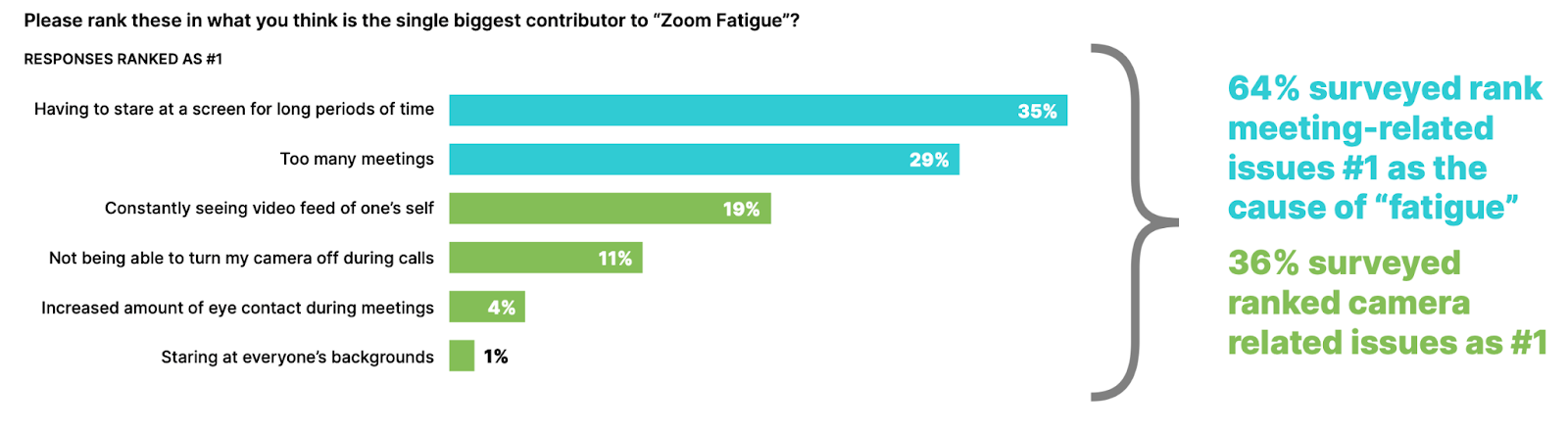
Meeting fatigue is real. 64% of employees rank meeting-related issues as the number one cause of workplace fatigue, according to Virtira’s 2023 Webcam Study.
FAQs
The five stages of project management are initiation, planning, execution, monitoring, and closure. Initiation defines the project goals and stakeholders, while planning outlines tasks, timelines, and responsibilities. Execution is where the work happens, and monitoring ensures progress stays on track by addressing issues early. Closure wraps up the project and captures learnings.
Project management requires strong organization, clear communication, and the ability to prioritize effectively. You need to coordinate people, deadlines, and deliverables while keeping clients informed and expectations aligned. Problem-solving is also critical, especially when timelines shift or feedback causes delays.
Roadblocks are issues that slow down or stop progress during a project. In marketing, common roadblocks include unclear briefs, delayed client feedback, missed approvals, and scope creep. Communication gaps and scattered tools can make these problems worse. Reducing roadblocks starts with better planning, clearer roles, and centralized feedback.
The Bottom Line
You don’t need a massive overhaul to manage client projects better. Small, intentional changes to how you assign work, set priorities, and use tools can create a huge shift in your team’s output and morale.
If you’re managing client feedback on your social media campaigns, look no further than Gain. It’s built to simplify content approvals, reduce back-and-forth, and keep client content and feedback in one place.
Try Gain for free now.