Here’s a number that should get your attention: roughly 95% of new products launched each year fail. That’s not a typo. Despite the best intentions, the biggest budgets, and genuinely great products, most launches fall flat. And more often than not, the product itself isn’t the problem. The marketing is.
The good news is that a successful product launch is absolutely repeatable. It comes down to a clear strategy, the right timing, and a team that’s working in sync. This guide breaks down exactly how to make it happen, from your very first teaser post to post-launch momentum.
What Is Product Launch Marketing Exactly?
Product launch marketing is the strategic process of promoting and introducing a new product to the market to generate awareness, interest, and sales. It involves coordinated efforts across messaging, channels, and timing to ensure the product reaches the right audience and achieves a strong market entry.
Most marketers think about launches in three phases: pre-launch, launch day, and post-launch. Each one has its own goals, tactics, and metrics. The mistake most teams make is front-loading all their energy on launch day and leaving the other two phases underdeveloped.
How to Do Product Launch Marketing in Four Steps
Step 1: Build Your Strategy Before You Create Any Content
Before you write a single caption or brief a single designer, you need a launch strategy that answers the most important questions:
- Who are you launching to?
- What do you want them to do?
- And how will you reach them?
Start by defining your launch goals clearly. Are you going for maximum awareness? Driving pre-orders? Building a waitlist? Your goal shapes everything else, from your messaging to your channel mix to how you measure success.
Next, get specific about your audience. Your ideal customer profile should go beyond demographics. What are they watching, reading, and sharing? Where do they discover new products? What would make them stop scrolling?
Then map your channels to where your audience actually lives, not where you’re comfortable posting. A product targeting Gen Z likely needs TikTok and Instagram at the center of the plan. A product aimed at millennials might lean harder into email and influencer content.
In short, have a written plan to keep your team aligned and give you a north star when things get hectic, and they always do.
Step 2: The Pre-launch Phase: Building Anticipation That Converts
The pre-launch phase is your biggest lever for making launch day feel like an event rather than just an announcement. Done well, it creates real demand before your product is even available.
Start teasing early. Behind-the-scenes content, sneak peeks, and countdown campaigns build curiosity and keep your audience engaged over time. An email waitlist is one of the most valuable assets you can build in this phase. People who opt in before launch are already warm leads. According to the Litmus Email Marketing Report, email marketing delivers an average ROI of $36 for every $1 spent, making it the highest-return channel you can invest in ahead of launch day.
Influencer seeding is another pre-launch move that pays dividends. Getting your product into the hands of trusted voices before launch creates organic content and social proof that money simply can’t replicate. Choose creators whose audience genuinely matches your target customer, not just those with the biggest follower counts.
Step 3: Launch Day Execution: Making Noise That Actually Lands
The big day has arrived! 🥳 Launch day is the one day in your campaign where everything has to fire at once. The worst thing you can do is treat it like any other content day.
A coordinated multi-channel drop means your email goes out, your social posts go live, your paid campaigns switch on, and your PR placements land on the same day, ideally within the same time window. This creates a wave effect where your audience encounters your product from multiple directions at once.
Encourage employee and partner amplification, too. Your internal team sharing launch content authentically adds reach and credibility. Brief them in advance and make it easy with pre-written captions and ready-to-share assets.
Keep a real-time response team ready. Comments, DMs, and press inquiries will come in fast. Having someone available to engage immediately signals that there’s a real team behind the product, and it builds trust quickly.
One stat worth keeping front of mind: marketers who ran campaigns across three or more channels saw a 494% higher order rate compared to single-channel campaigns. If you’re only launching on one platform, you’re leaving a lot on the table.
Step 4: Post-Launch: Keeping the Momentum Going
Most launch campaigns lose steam within the first week. The teams that see the best long-term results are the ones who plan their post-launch content before launch day even arrives.
User-generated content is your best asset here. Encourage customers to share their experience and reshare it across your channels. Your customers’ voices will always be more persuasive than your own.
Keep your content engine running with reviews, tutorials, comparison content, and case studies. Retarget people who engaged with your launch but didn’t convert. And take a hard look at your data within the first 30 days. What channels drove the most engagement? What messaging resonated? Use those insights to optimize everything that comes next.
Three Brands That Nailed Their Product Launch
The steps above aren’t just theory. Here are three brands that put them into practice and launched products people couldn’t stop talking about.
Stanley Quencher
The Stanley Quencher is one of the most remarkable relaunch stories in recent memory. The tumbler had been around for years but was quietly underperforming. Stanley’s team partnered with The Buy Guide, a shopping recommendation platform with a loyal community of female consumers who were already talking about the product organically.
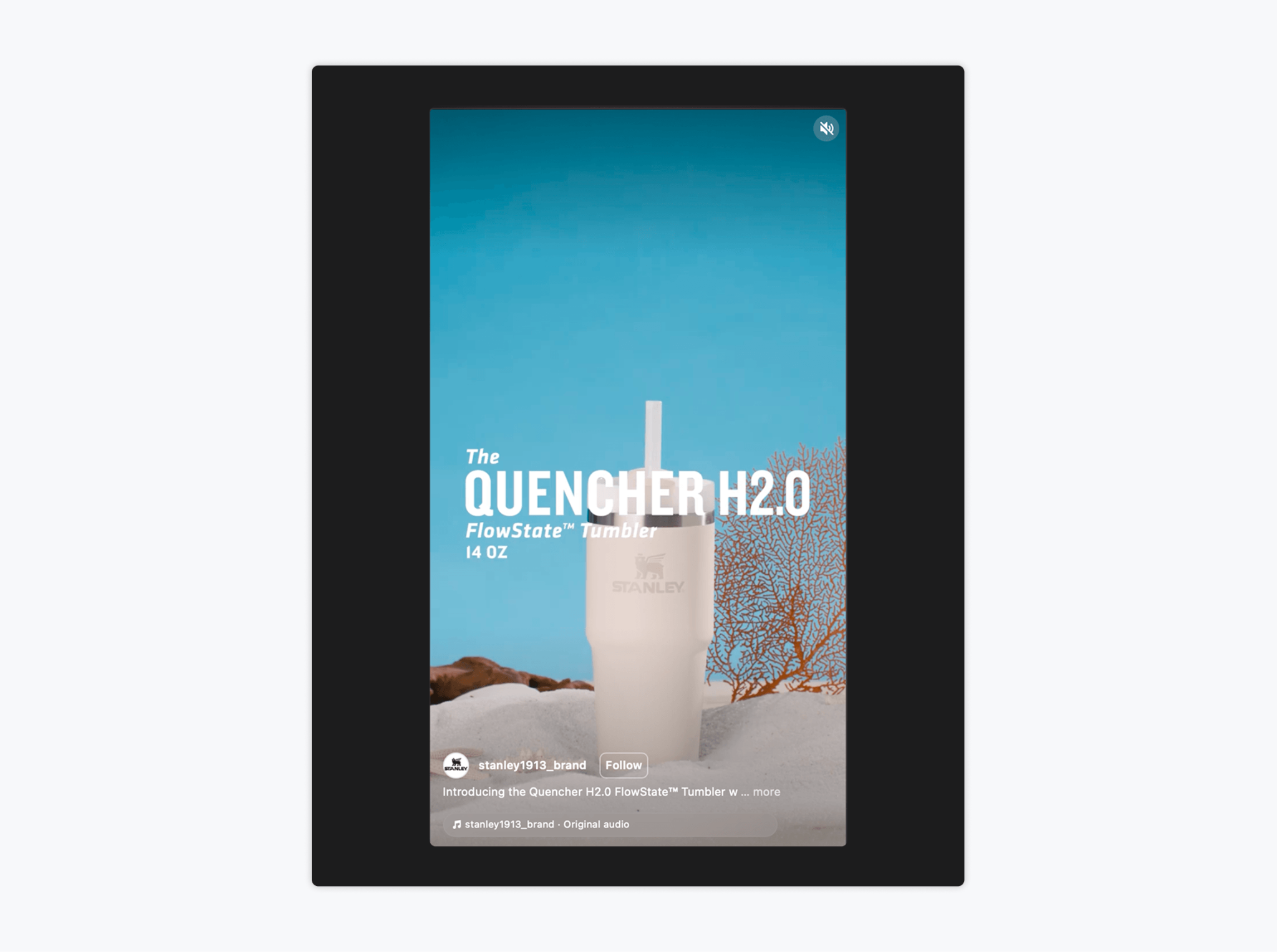
Stanley listened, restocked inventory, and expanded the color range. What followed was a full-blown cultural moment, with TikTok videos going viral and the product selling out repeatedly. Stanley grew from $73M in revenue in 2019 to over $700M+ by 2023.
The key lesson? Sometimes your best launch strategy is listening closely to the audience you already have.
Dyson Airwrap
Dyson turned a premium hair styling tool into one of the most coveted product launches in the beauty space by combining scarcity, influencer seeding, and impeccable visual storytelling. Every product refresh or new colorway drops like a limited-edition release.
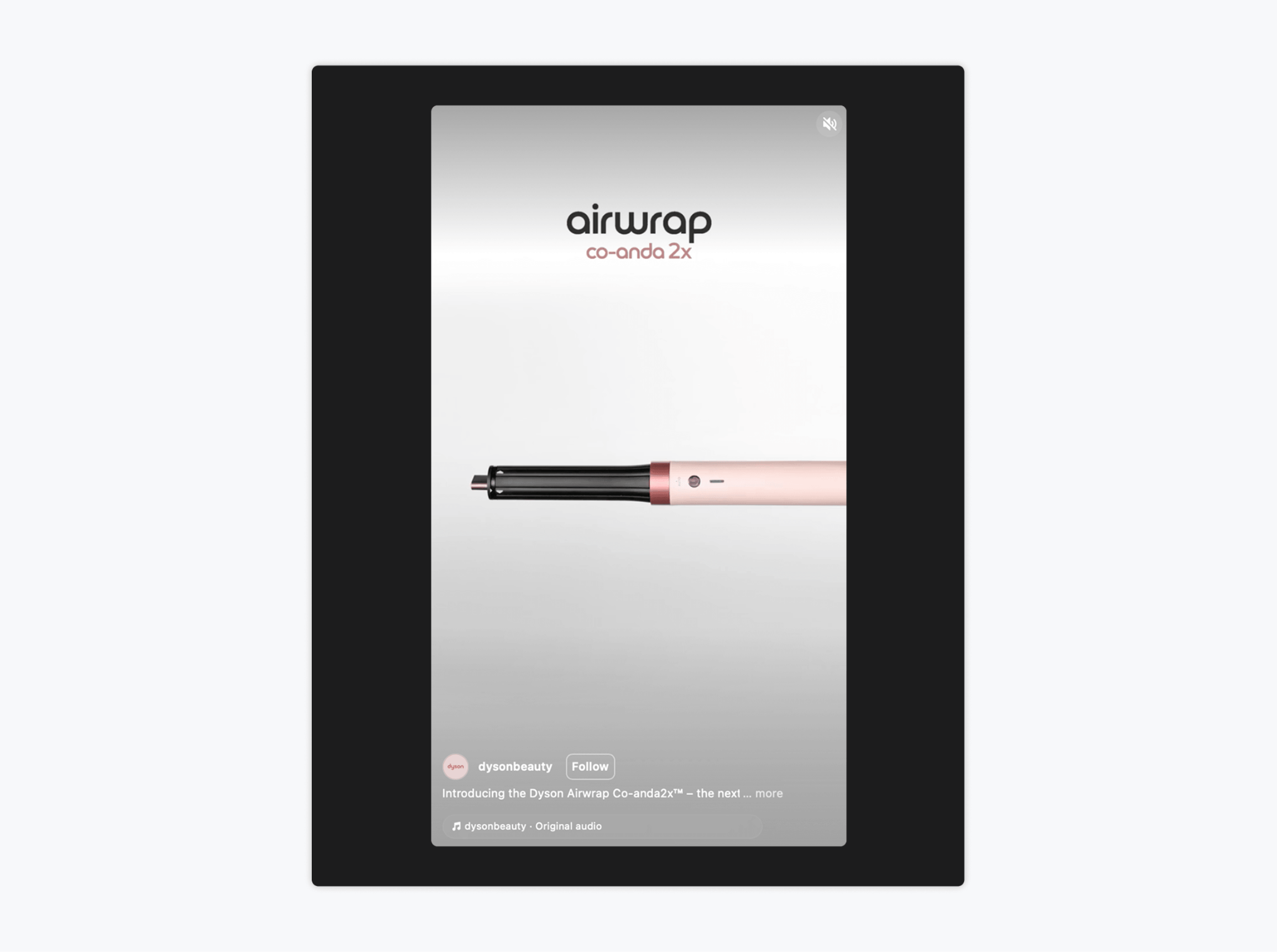
Dyson seeds products to high-profile creators weeks ahead of the official launch, building anticipation through organic content before a single paid ad goes live. The result is a product that rarely needs heavy paid amplification to sell out. The Airwrap became a status symbol in part because Dyson treats every launch with the same care and intention that a luxury brand gives to a runway show.
Rhode Skin by Hailey Bieber
Rhode launched with just three products and almost no traditional advertising. Instead, Hailey Bieber used her personal platform to build anticipation, leaning into an aesthetic that felt editorial and personal rather than commercial.
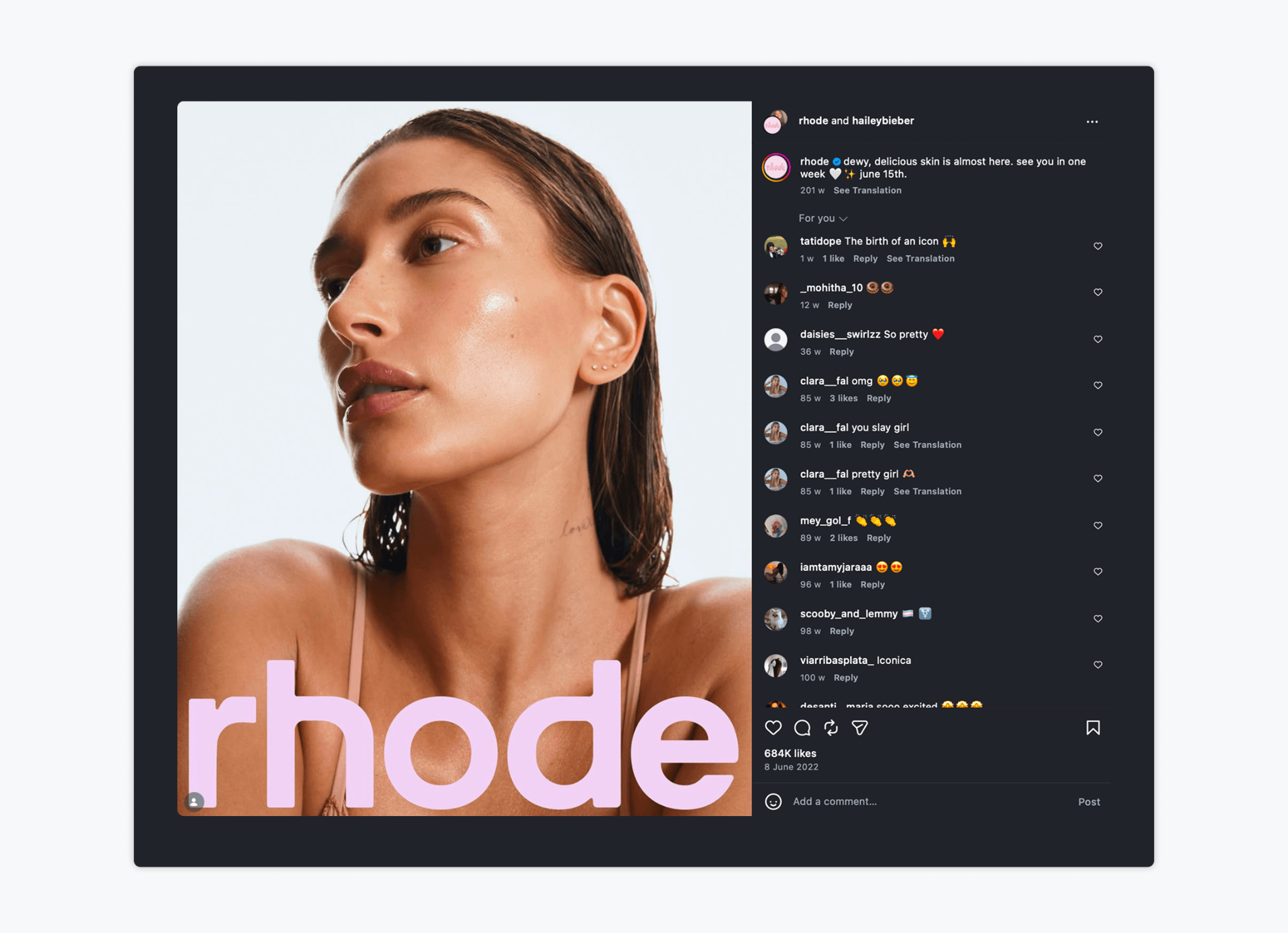
The brand used strategic product drops to maintain scarcity and keep the community engaged over time. Rhode’s first year generated an estimated $40+ million in revenue, without a single traditional ad campaign driving it. The launch proved that a tight product range, a clear point of view, and a founder-led content strategy can outperform a massive ad spend when your positioning is sharp enough.
Common Product Launch Marketing Mistakes to Avoid
Even the most experienced marketing teams get tripped up at launch. Here are common mistakes worth watching out for before you hit go: 👇
- Starting too late. A short pre-launch runway means less time to build awareness, seed influencers, and warm up your audience before launch day arrives. Most successful launches need at least 8 weeks of pre-launch activity to generate the kind of anticipation that translates into real sales momentum.
- Skipping a content approval process. Unreviewed content going live during a high-visibility launch can damage brand trust fast. A typo in a hero email or an off-brand caption on launch day is the kind of thing that gets screenshotted. Building a clear content approval workflow before launch can protect the quality of your campaign and save you from costly last-minute mistakes.
- Working in silos. When your social, email, PR, and paid teams aren’t aligned, messaging becomes inconsistent, and the launch feels fragmented to your audience. The same product should tell the same story across every channel, even if the format changes. A shared content calendar and regular cross-team check-ins go a long way toward keeping everyone on the same page.
- No plan for after launch day. The post-launch window is where long-term momentum is built or lost. If your content calendar goes quiet after day one, so does your audience’s interest. Plan at least two weeks of post-launch content, including customer stories, UGC reshares, and retargeting campaigns, so you’re not starting from scratch once the launch buzz fades.
FAQs
You’ll probably be planning your product launch campaign several months in advance. However, as a rule of thumb, a full campaign typically runs 12 to 16 weeks in total. 6 to 8 weeks of pre-launch activity, 1 to 2 weeks of launch window execution, and at least 4 weeks of post-launch content and optimization.
Start by borrowing one. Partner with creators, brands, or communities that already have the audience you want. Offer early access in exchange for honest content. Run a waitlist with a referral incentive to grow your list organically.
A soft launch is a limited, low-key release, often to a specific audience or region, to test the product and gather feedback before going wide. A hard launch is a full, coordinated push across all channels at once with maximum visibility.
Wrapping Up
Running a product launch is one of the most exciting and stressful things you can do as a marketer. There are a lot of moving parts, a lot of people with opinions, and very little room for error. But when the strategy is solid and the team is aligned, it’s also one of the most rewarding campaigns you’ll ever work on.
If you’re managing a product launch across a team and multiple stakeholders, keeping everyone aligned on content is one of the hardest parts of the job. That’s exactly where Gain comes in.
Gain gives your team one central place to create, review, approve, and schedule all your launch content, with automated content approval workflows that keep things moving without the chaotic email threads. With Gain, when launch day comes, you’ll be ready.
Try Gain for free today!