Social media can build a brand overnight. It can also tear one down just as fast. For global brands managing dozens of accounts across multiple markets, the stakes are higher than ever. One poorly timed social media post, one campaign that missed the mark in a specific region, or one post that slipped through without proper review can snowball into a full-blown crisis in a matter of hours. With reputation accounting for more than a third of a company’s market worth, managing risks becomes super important!
The good news is that most social media risks are preventable. Not by posting less, but by having the right processes in place. Here is what enterprise marketing teams need to know to keep their brand protected without slowing down their content operation.
What Makes Social Media Risky for Global Brands
Managing social media for a single brand operating in one country is hard enough. Scale that across multiple regions, languages, regulatory environments, and time zones, and the complexity multiplies fast.
A few things make global brands especially vulnerable:
- Volume and velocity: Large teams are publishing a lot of content, across a lot of channels, all the time. The more posts, the more chances for something to go wrong.
- Decentralized teams: Regional agencies, freelancers, and in-house teams are often all operating under the same brand umbrella with varying levels of oversight.
- Cultural and regulatory differences: What is acceptable in one market can be offensive, or even illegal, in another. Advertising regulations, disclosure requirements, and content standards vary widely by country.
When It Goes Wrong: Real Brands, Real Consequences
The following examples aren’t edge cases. They’re the kinds of incidents that happen when content moves fast, oversight is thin, or the content approval system breaks down at exactly the wrong moment.
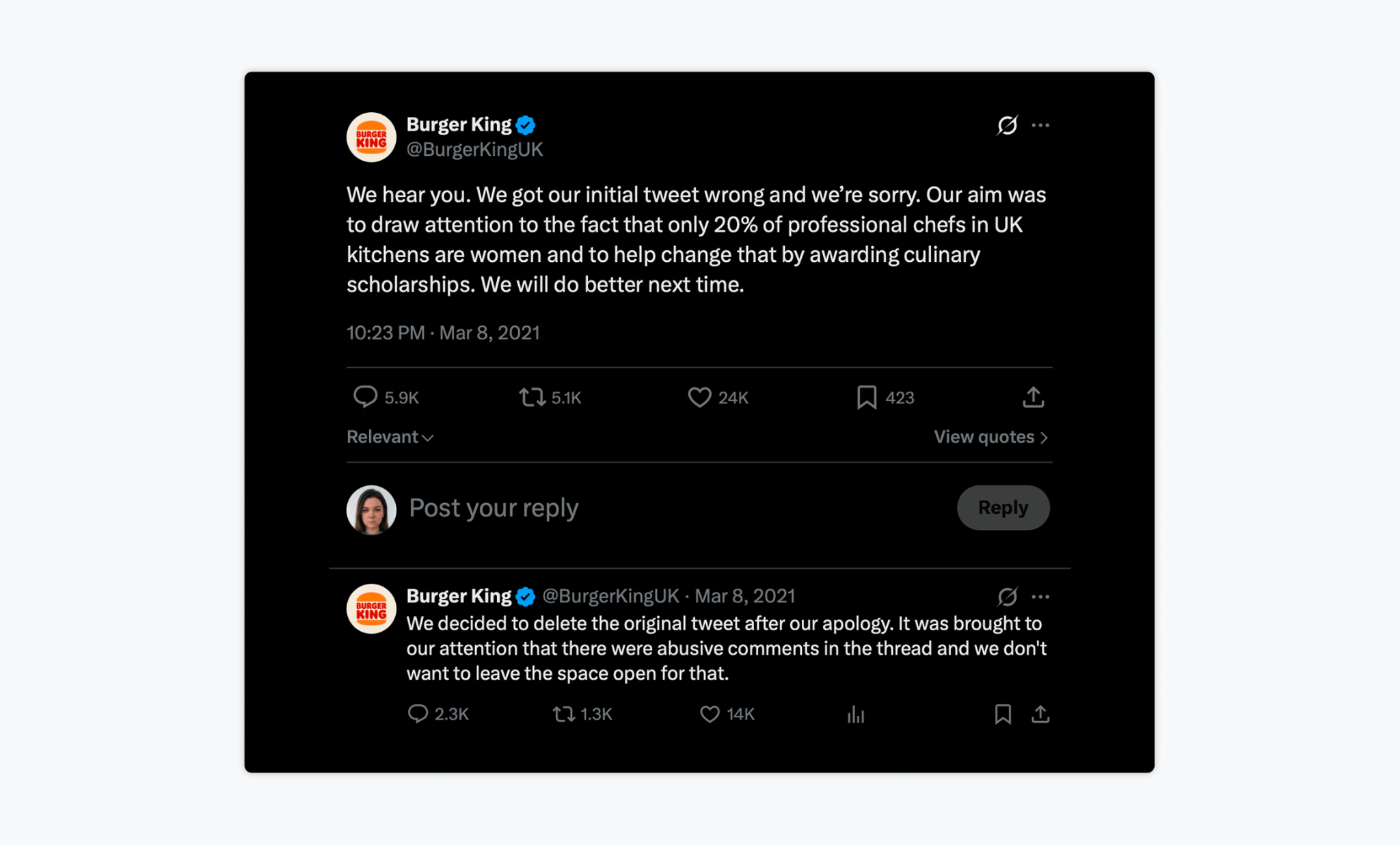
In March 2021, Burger King UK opened an X (Twitter) thread on International Women’s Day with the words “Women belong in the kitchen.” The intent was to set up an announcement about culinary scholarships for women in the restaurant industry. But the opening tweet went live on its own first, without the follow-up tweets that provided the context. Before most people saw the rest of the thread, the standalone post had already spread widely and drawn significant backlash. Burger King UK deleted the thread and issued an apology.
In November 2022, Balenciaga launched a holiday campaign that included images of children posed with bags styled to resemble bondage-themed teddy bears. The images circulated rapidly on social media. Several high-profile brand ambassadors publicly paused their relationships with the brand. Balenciaga issued multiple apologies and filed, then later dropped, a $25 million lawsuit against the production company involved in the shoot. The incident raised serious questions about how the campaign had passed through the approval process at all.
And it is not just reputation on the line. Regulatory consequences are increasingly real. In 2022, Instagram was fined 405 million euros by Ireland’s Data Protection Commission for mishandling children’s personal data on the platform. In 2023, Meta received the largest GDPR fine ever issued: 1.2 billion euros. That same year, TikTok was fined 12.7 million pounds by the UK’s Information Commissioner’s Office for similar children’s data violations. The FTC has also been actively pursuing brands and influencers for undisclosed paid partnerships, and violations can result in significant financial penalties.
| 👀 For a deeper look at what went wrong in some of these cases, take a look at our roundup of failed social media campaigns. |
The common thread? If you look at almost any of these major social media failures, you’ll find one of a few root causes: no one reviewed the post properly, the stakeholder approval chain broke down, or the team lacked the context to catch the issue. In other words, process failures. Not creative failures. Not strategy failures. Process failures. That is actually good news, because the process is something you can fix.
How to Build a Social Media Risk Management Framework in 6 Steps
The goal isn’t to eliminate risk entirely. That would mean not posting at all, which isn’t a realistic option for any brand. The goal is to reduce preventable risk with a structure your team can actually follow. Here is where to start: 👇
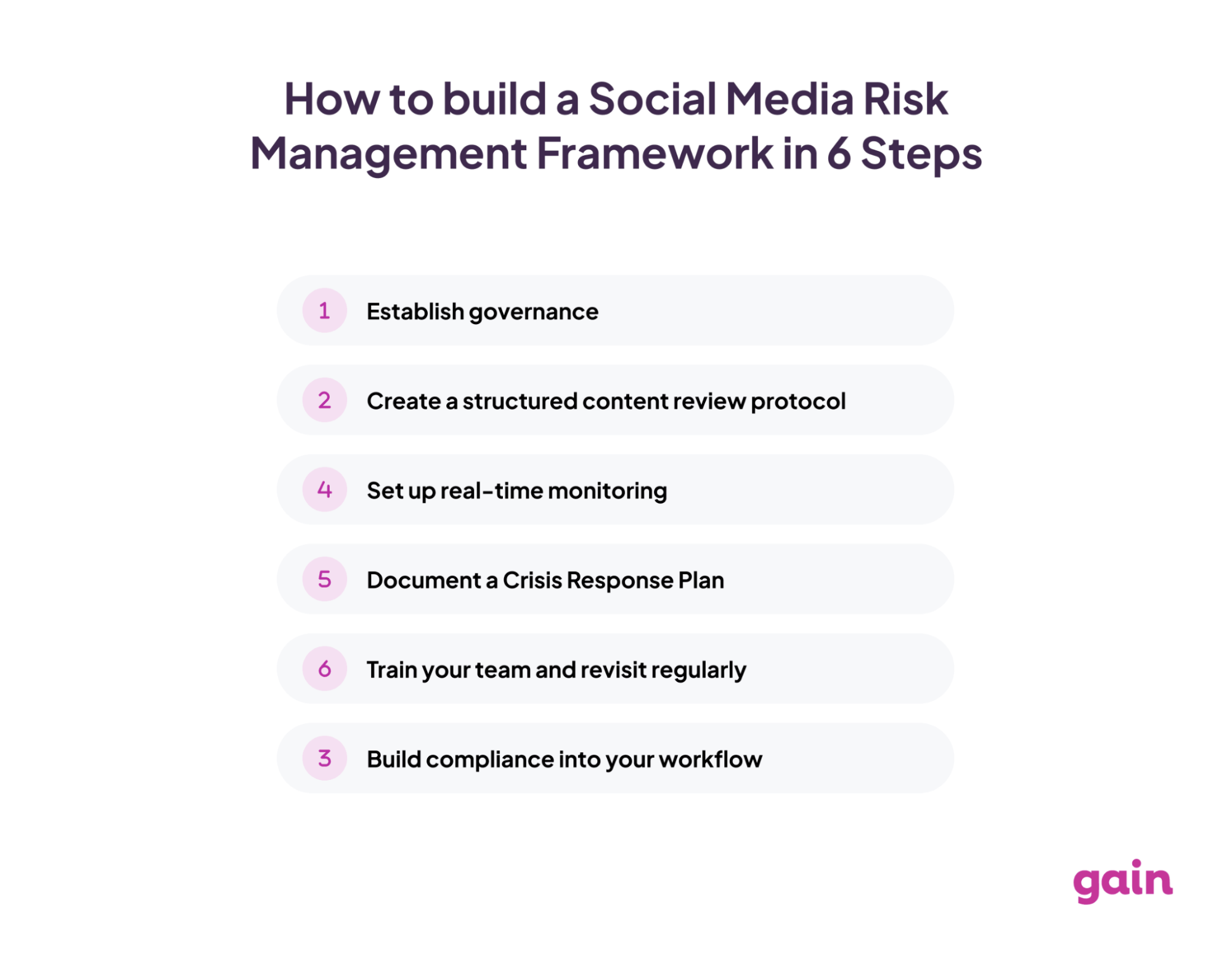
Step 1: Establish Governance
Governance is the foundation on which everything else sits. Start by defining:
- Who owns the brand voice
- Who has publishing access across each channel
- What your content approval workflow looks like, including who must review content before it goes live
If you work with regional agencies, freelancers, or external partners, they need to operate within the same framework. Ambiguity about who has the final say is how things get published that shouldn’t be.
Document your governance structure clearly, store it somewhere everyone can access, and revisit it whenever your team or agency roster changes. If you haven’t formalized this yet, our guide on how to build a social media policy is a good place to start.
Step 2: Create a Structured Content Review Protocol
Not a Slack message. Not a quick email thread. A documented, repeatable process where the right people review every post before it’s published. This means:
- Defining review stages
- Who participates in each one
- How feedback is collected
- What approved actually means before content moves to scheduling
Pay particular attention to content that touches on trending topics, cultural moments, or anything reactive, because those posts tend to move fast and carry the highest risk. Speed isn’t an excuse to skip the process. If your content approval workflow is slowing you down, the answer is a better workflow (or better tools that can help you streamline it), not fewer reviews.
Step 3: Build Compliance Into Your Workflow
Compliance can’t be an afterthought. Disclosure requirements, data privacy rules, and advertising standards all vary by country and platform, and the regulatory environment is tightening. Build a compliance checklist that your team can use before any post goes to approval. This should cover sponsored content disclosures, any claims that require substantiation, platform-specific rules, and regional restrictions that apply to your markets. Assign someone ownership of keeping that checklist current.
Regulations change more often than most teams realize, and outdated guidance is almost as risky as no guidance at all. Our guide on how to navigate social media compliance covers the key frameworks worth knowing.
Step 4: Set Up Real-time Monitoring
Your team should know what’s being said about your brand as it happens, not hours later when a situation has already escalated. Social listening gives you visibility into brand mentions, sentiment shifts, and emerging conversations across platforms, including ones you didn’t start. This matters for catching a post that’s performing unexpectedly, identifying a hashtag your brand is being pulled into without your knowledge, or spotting a regional story that has relevance to your scheduled content.
The faster you detect an issue, the more options you have for responding to it.
Step 5: Document a Crisis Response Plan
Most brands don’t think seriously about crisis response until they’re already in one. By then, it’s too late to be calm and methodical about it.
Write your plan before you need it. Define who is responsible for detecting and escalating issues, who has authority to approve the public response, what your expected response timeline looks like, and which channels you will use to communicate.
Also, don’t forget to include guidance on what not to do, like going silent for too long or issuing a response that tries to minimize what happened. Run a tabletop exercise with your team at least once so that when something does go wrong, no one is figuring out the process in real time.
Step 6: Train Your Team and Revisit Regularly
Last but not least, build in regular training so your team stays current on platform policy changes, evolving regulations, and the cultural context that shapes how content lands in different markets. New team members and new agency partners should go through onboarding that covers your content standards and approval process before they touch a single post.
And after any incident, use the debrief as a genuine learning moment. Update your processes, retrain where needed, and document what changed so the next team member who joins understands why things work the way they do.
Why Your Content Approval Workflow Is Your First Line of Defense
In all honesty, the easiest way to reduce costly social media mistakes (which can easily escalate into full-blown backlash) is to have a well-thought-out content approval workflow.
There are a lot of social media compliance tools on the market, but very few combine compliance-friendly content approval workflows with full content management and publishing. Gain does.
Gain is a social media management tool built specifically for teams that need to manage content at scale without things slipping through the cracks. You can build fully customizable content approval workflows with multiple internal and external revision rounds, as many stakeholders as you need, and automated follow-ups so nothing stalls because someone forgot to check their inbox.
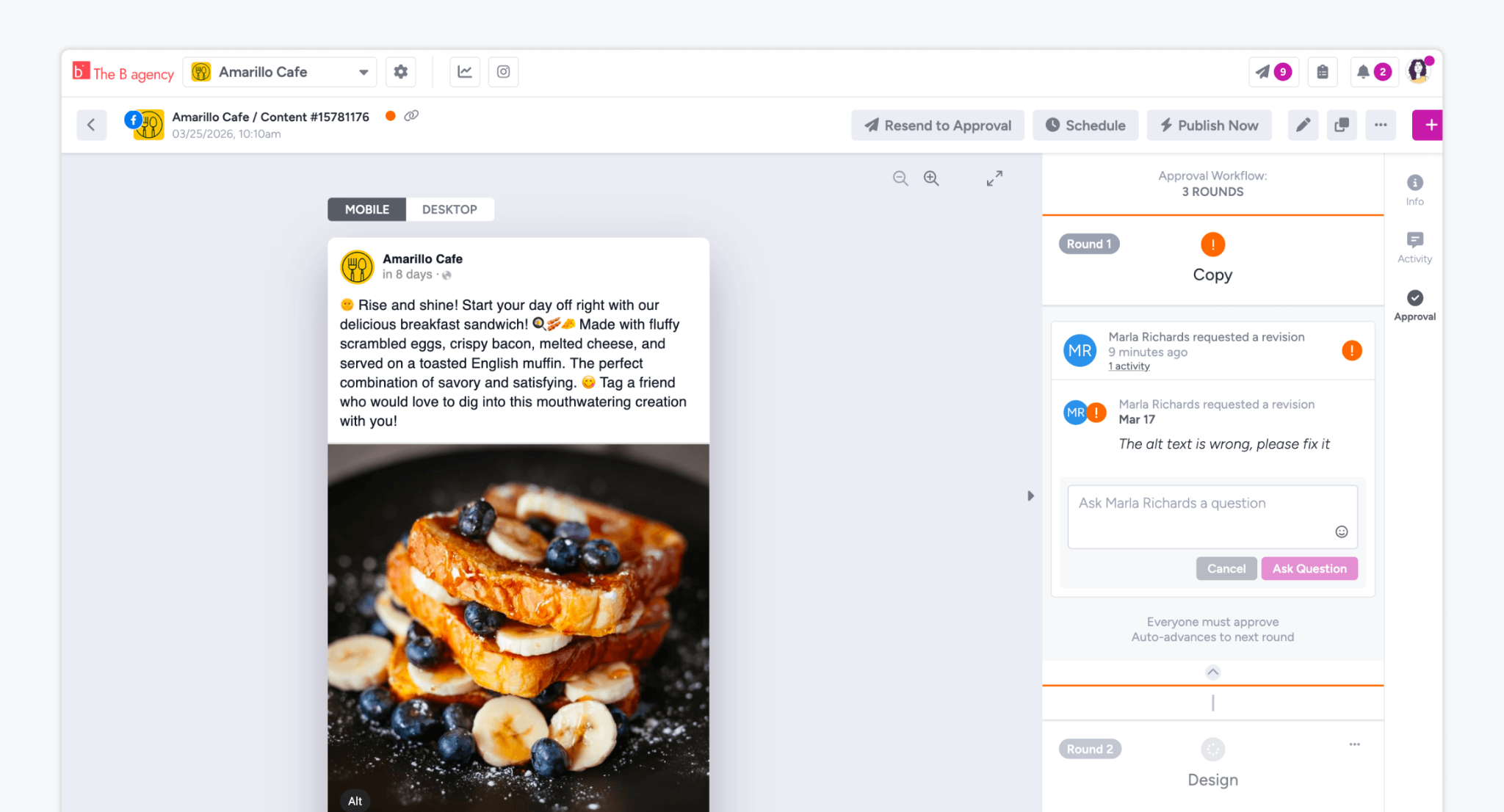
Every action is logged. Gain keeps a time-stamped log of every revision request, change, and approval, right next to the content it applies to. If a post ever gets called into question, you have a clear record of who saw it and when. Compliance teams love this.
And once content is approved, Gain auto-schedules and publishes it. Nothing goes live unless it’s been through the process. That alone eliminates one of the biggest sources of accidental posts: human error in the publishing step.
FAQs
Social media risk includes anything that could damage your brand’s reputation, expose you to legal liability, or violate platform rules. This covers offensive or culturally insensitive content, undisclosed sponsored posts, privacy violations, reactive content that misses the mark, and simply posting the wrong thing at the wrong time.
A good rule of thumb: if a post can go live without being seen by at least one person who was not involved in creating it, your process has a gap. Strong content approval workflows include multiple review rounds, stakeholder sign-off where needed, and a clear record of who approved what and when.
The main ones to know include GDPR in Europe (especially around data practices tied to social advertising), FTC guidelines in the US on disclosures for paid partnerships and influencer content, and ASA rules in the UK. Each social platform also has its own advertising and content policies. If you are operating across multiple markets, a legal review of your content practices for each region is worth the investment.
At minimum: who is responsible for detecting and escalating issues, who approves the public response, what the response timeline looks like, which channels you will use to communicate, and how you will document the incident and debrief afterward. The plan should also be written down and accessible to everyone who might need it.
Take Your Social Media Risks Seriously
If you want to avoid landing in hot water after posting something you shouldn’t have, it’s time to invest in better social media risk management.
The brands that avoid social media disasters are the ones that have a well-thought-out content review process. If your current approval workflow is held together with email chains and crossed fingers, it might be time to upgrade.
Try Gain for free and see how much smoother your social media operations can run.