Let’s be honest: no one has unlimited time to create brand-new content every week. And the good news is, you don’t need to. Content recycling, which means reusing and repurposing content you’ve already published, is one of the most underrated strategies in marketing.
Done well, it helps you stay consistent during slow periods and squeeze real value out of content you’ve already put effort into. Far from being a lazy move, it’s what a lot of the most efficient marketing teams are quietly doing in the background.
Here’s everything you need to know to do it right.👇
What Is Content Recycling Exactly?
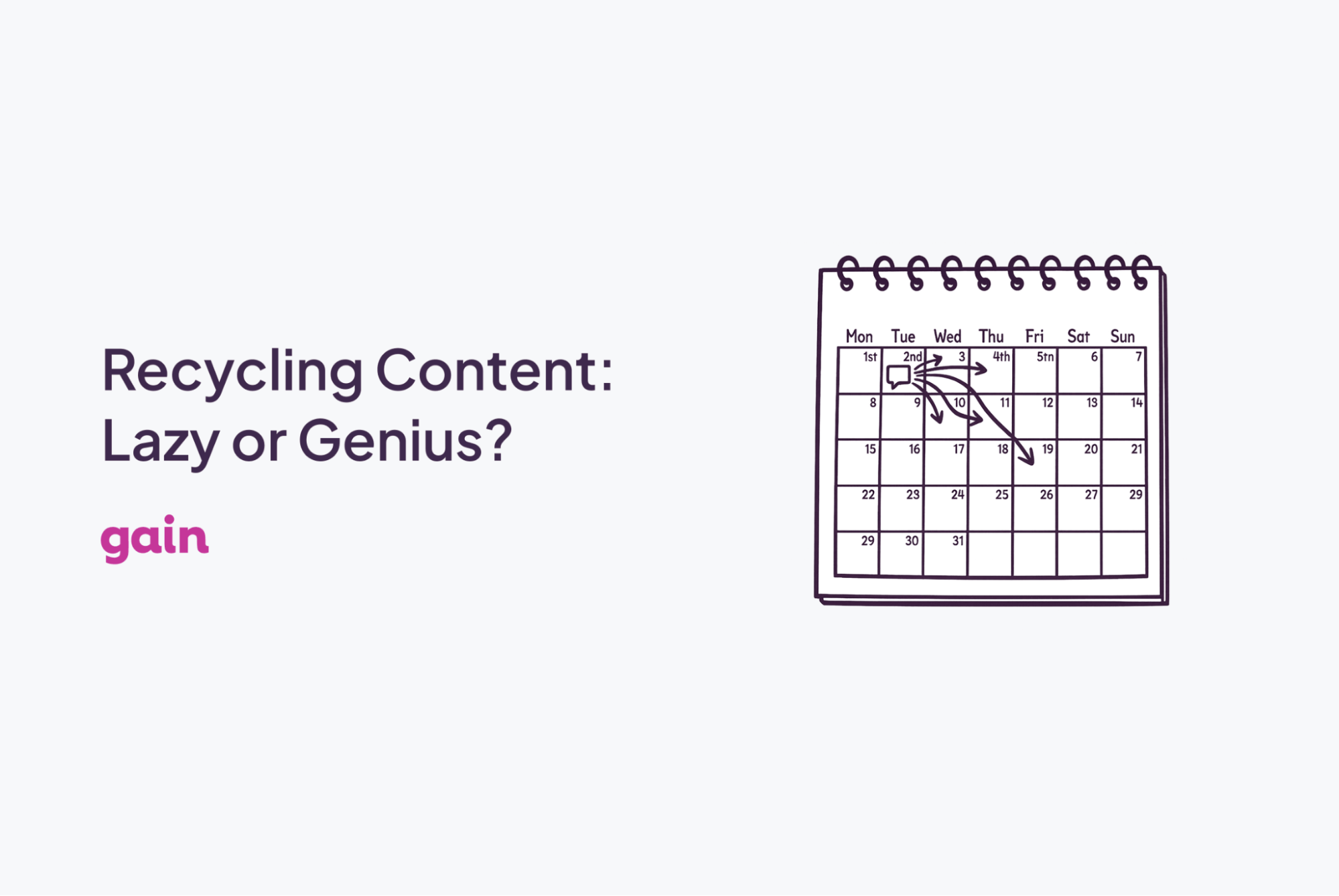
Content recycling is the practice of reusing previously published marketing content, whether that’s a social media post, blog article, video, or graphic, across the same or different platforms after some time has passed. The idea is to make your best existing content work harder by giving it a second life with a new audience, a refreshed format, or an updated context.
Why You Should Recycle Your Marketing Content
You don’t have to recycle your content at all. If you have the resources to create new content consistently, that’s great. But there are some clear advantages to recycling that are worth considering.
Your Entire Audience Never Sees Everything You Post
The average organic reach of a social media post is a fraction of your total following, and the numbers back this up. According to a 2025 Socialinsider study, Instagram’s average reach rate sits at just 3.50%. On Facebook, it’s even lower at 1.20%.
In other words, the vast majority of your followers simply never see most of what you post. And since you’ve likely gained new followers since you originally published it, recycled content will be completely fresh to them anyway. Recycling is a simple way to extend the life and reach of your best work without any extra creative effort.
Recycled Content Keeps Your Calendar Consistent
Staying consistent with your posting schedule is one of the most important things you can do for your social media presence, but it’s also one of the hardest. When the ideas well runs dry, recycling high-performing content from six months ago is a perfectly legitimate way to fill the gaps in your content calendar without compromising on quality.
Nostalgia Is a Legitimate Marketing Tool
People like nostalgia. The things we love can bring back the positive feelings we had the first time we experienced them. If you have content that made your audience laugh or feel something meaningful at one point, there’s a good chance it can do the same thing again.
What Content Is Worth Recycling?
Not all content is worth bringing back as-is, though. A good rule of thumb is to ask yourself three questions❓before recycling anything:
- Is it still accurate?
- Did it perform well the first time?
- Is it evergreen enough to hold up without a specific date, event, or trend propping it up?
Here’s a quick guide to what tends to work and what doesn’t:
| Content type | Recycle it? | Why? |
| Top-performing posts | Yes | If it resonated once, it can resonate again with a bigger audience |
| Customer testimonials | Yes | Social proof doesn’t have an expiry date |
| Seasonal content | Yes, at the right time | Repost when the season or occasion comes back around |
| Trend or news-based posts | No | Will feel dated and could make your brand look out of touch |
| Time-sensitive offers or event announcements | No | Clearly tied to a moment that has already passed |
When in doubt, ask whether a new follower discovering your brand today would find it useful or relevant. If yes, it’s worth another run.
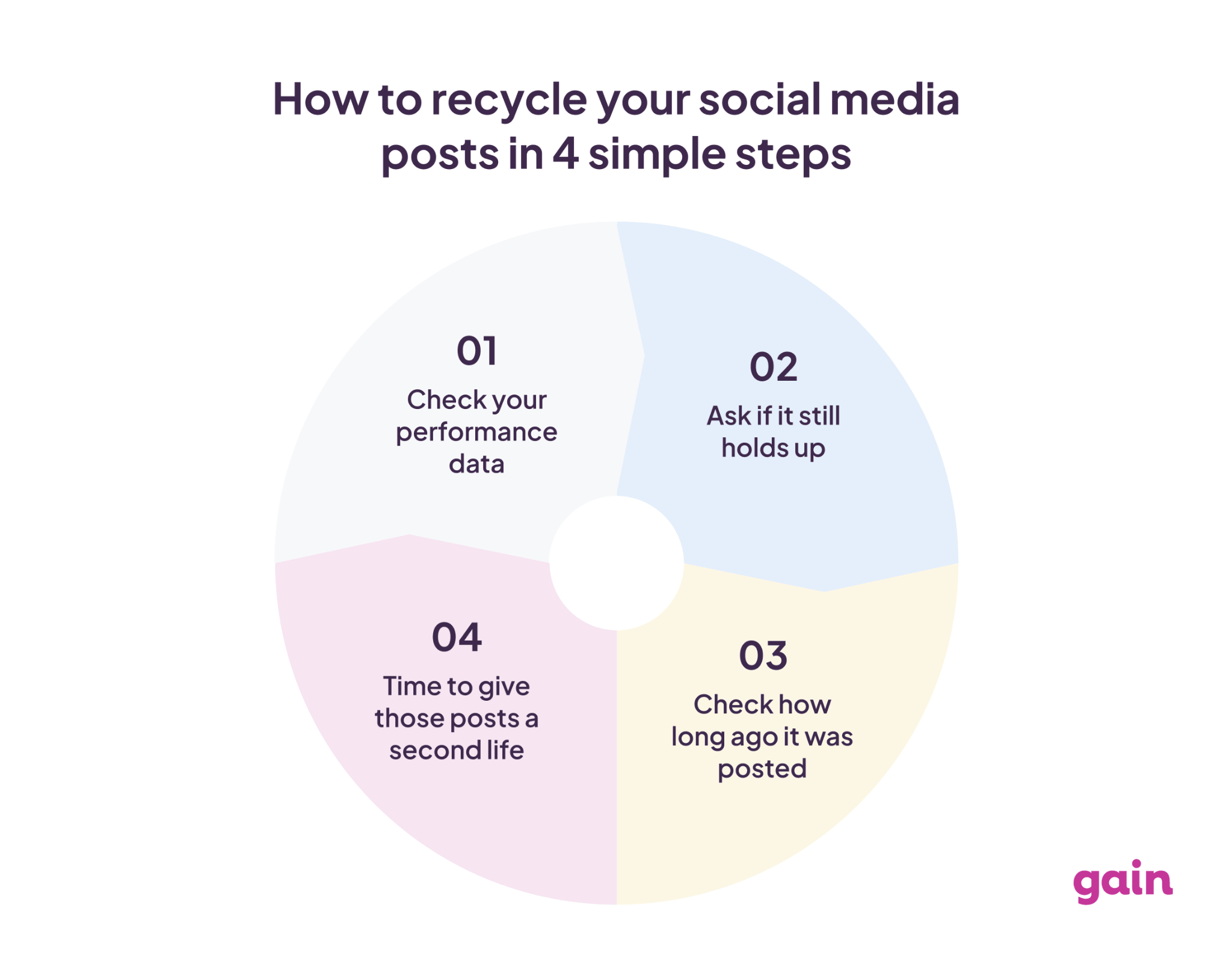
How to Recycle Your Social Media Posts in 4 Simple Steps
There are really two parts to this process: figuring out which posts are worth recycling, and then actually doing it without it eating up your time. Here’s how to tackle both.👇
Step 1: Check Your Performance Data
It’s always wise to start with the numbers. Go back through your previous posts and look for content that drove strong engagement, whether that’s likes, comments, saves, or shares. High performers are your best candidates because they’ve already proven they connect with your audience.
Step 2: Ask If It Still Holds Up
Before anything goes back out, make sure the content is still accurate, relevant, and appropriate. Read through the caption, check any links, and consider whether anything has changed since you first posted it. If it needs a minor caption update, that’s totally fine.
Step 3: Check how long ago it was posted
A general rule of thumb is to wait at least three to six months before recycling a post. If your audience has grown significantly since you first published it, you might be able to recycle sooner since a large share of your followers will be seeing it for the first time. On the flip side, if your growth has been slow and you’re posting to largely the same audience, waiting longer makes more sense.
Step 4: Time to Give Those Posts a Second Life
Once you’ve identified the posts you want to reuse, the usual process involves going back into each platform, manually recreating or copying the post, and scheduling it all over again. Not exactly a quick job.
That’s why a smarter approach is to use a tool like Gain. Gain lets you create content, get it approved by stakeholders, and publish across all your major social channels in one place, and recycling posts is just as straightforward.

Simply head to your calendar or gallery view, select the posts you want to recycle, and hit Recycle from the action bar. Choose a date and time range, and Gain drops them straight into your calendar as drafts, ready for you to tweak, get them approved, and schedule. Voilà!
When Can Recycling Content Go Wrong?
To get positive reactions from your followers, you need to recycle content with care. Here are a few things to watch out for:
- Don’t overdo it. Space out your recycled content strategically. Let enough time pass so it doesn’t feel repetitive, and check your follower growth to make sure newer audiences will be encountering it for the first time.
- Keep it relevant. The content you recycle must still be relevant to your audience today. Publishing something that’s clearly outdated will make your brand feel outdated, too. If a piece of content needs a refresh before it goes back out, take the time to update it.
- Watch your analytics. If a post didn’t perform well the first time, recycling it rarely fixes that. Low engagement is usually a signal that the content didn’t resonate, not just that the timing was off. Be selective and prioritize content that already has a track record of connecting with your audience.
FAQs
Most marketers recommend waiting at least three to six months before reposting the same piece of content. The right interval also depends on your posting frequency and how quickly your audience grows. The faster your following grows, the sooner you can recycle, since a larger share of your audience will be seeing it for the first time.
The terms are often used interchangeably, but there’s a subtle difference. Content recycling usually refers to reposting the same content again, either on the same platform or a different one. Content repurposing involves transforming existing content into a new format, like turning a blog post into a video or a webinar into a series of social posts.
Ready to Get More from What You’ve Already Made?
Content recycling is one of those strategies that pays off quietly in the background. It keeps your presence consistent, stretches the value of work you’ve already done, and takes some of the pressure off your team to constantly produce something new. Start small, be selective about what you bring back, and build it into your regular content rhythm.
And if you want to make the whole process faster and less manual, give Gain a try. You might be surprised how much time you get back.