A campaign is ready to launch. Marketing has approved the messaging, but the legal department flags a claim on the landing page. The copy goes back for revisions, feedback gets scattered across email threads, and suddenly no one is sure which version has the final sign-off.
This isn’t an uncommon problem. According to Pacey’s 2026 research, 35% of marketers identified too many stakeholders or conflicting feedback as the biggest obstacle to effective marketing.
For enterprise teams, the challenge is getting legal and marketing teams to work together without turning every content review into a lengthy back-and-forth.
So, how can both teams review content efficiently while making sure nothing goes live without the right approvals? Let’s find out.
Why Legal and Marketing Content Reviews Get Complicated
Marketing and legal teams share a common goal: publishing accurate, effective content without exposing the business to unnecessary risk. However, their priorities differ, and without a clear review process, several problems can arise:
- Legal gets involved too late: A claim flagged in a nearly finished campaign can trigger last-minute revisions across ads, emails, landing pages, and other marketing content.
- Feedback gets scattered: Comments and change requests arrive through emails, Slack messages, and separate documents, making it difficult to keep track of what needs fixing.
- Approval responsibilities are unclear: Team members don’t always know who needs to review specific content or who has the authority to give final sign-off.
- Content versions get mixed up: Multiple revisions circulate between departments, leaving stakeholders uncertain about which version is ready for approval.
These issues create unnecessary back-and-forth, delay campaigns, and increase the risk of publishing content without the right approvals.
What Should Legal and Marketing Each Review?
Before setting up a collaborative approval process, you should establish what each team is responsible for. While their responsibilities sometimes overlap, marketing and legal teams bring different expertise to the table.
Marketing team typically reviews:
- Brand messaging, tone of voice, and visual consistency
- Content accuracy, audience relevance, and campaign objectives
- Creative execution and alignment across marketing channels
Legal stakeholders typically reviews:
- Advertising claims and whether they’re supported by sufficient evidence
- Regulatory disclosures, disclaimers, and compliance requirements
- Copyright, intellectual property, and permissions for third-party content
- Potentially misleading statements, testimonials, and promotional offers
Of course, not every piece of marketing content requires the same level of legal scrutiny. Teams should agree on which content needs legal reviewers’ input and when, so routine approvals don’t become unnecessarily complicated.
How Legal and Marketing Teams Can Review Content Together
A smoother review process starts with getting both teams on the same page about what needs reviewing, who makes the decisions, and how content moves toward publication.
Here are six ways to make that collaboration work: 👇
1. Decide Which Content Actually Needs Legal Review
Not every marketing asset carries the same level of risk. A routine social post using pre-approved messaging doesn’t need the same scrutiny as an ad making new product claims.
Start by establishing clear criteria for when a legal team’s involvement is necessary. For example, campaigns involving regulatory disclosures, customer testimonials, or unfamiliar claims may require closer review.
This helps your legal reviewers prioritize content that genuinely needs attention without creating unnecessary bottlenecks in your campaigns.
2. Bring Legal Team Into Campaign Planning Early
Once you’ve identified which content requires legal oversight, the next question is when that review should happen.
Waiting until a campaign is nearly ready to launch is asking for trouble. So, if it’s operationally feasible, bring your legal team into early campaign discussions to review key messaging, identify potential risks, and establish acceptable language before production begins.
This gives your marketing team room to refine creative ideas without scrambling to accommodate last-minute changes.
3. Establish Clear Approval Responsibilities
Early involvement helps, but it won’t eliminate confusion if nobody knows who has the final say.
For each campaign, clarify:
- Who provides feedback
- Who has approval authority
- Who is responsible for confirming that all sign-offs are complete
It’s also worth agreeing on review deadlines and an escalation process when stakeholders disagree.
4. Keep Feedback and Revisions in One Place
Clear responsibilities are only half the equation. Both teams also need to work from the same information. If your legal team drops a quick Slack message to approve a piece of content while your marketers work on the GoogleDoc, it’ll be easy for important feedback to get overlooked.
Instead, you should consider using a centralized content approval tool where stakeholders can review the latest version, request changes, and track outstanding feedback. That way, everyone can see what has changed and which decisions have already been made.
5. Agree on What Triggers Another Legal Review
Keeping revisions organized also raises an important question: what happens when someone modifies content that’s already been approved?
A minor formatting adjustment probably doesn’t warrant another review. Changing a product claim, promotional condition, or mandatory disclaimer is a different story.
Establish clear rules for which edits require renewed legal stakeholders’ sign-off.
6. Make Final Approval a Publishing Requirement
Finally, the approval process needs a clear endpoint: confirmation that the correct version has received every required sign-off.
For campaigns involving multiple assets, track each approval separately. An approved landing page doesn’t automatically mean the accompanying ad or email is cleared for publication.
Keep a record of who approved each asset, which version they reviewed, and when the decision happened.
How Gain Helps Legal and Marketing Teams Approve Content Together
Having a clear approval process is one thing. Making sure everyone follows it across dozens of campaign assets, departments, and stakeholders is another.
Gain is a content approval platform that helps legal and marketing stakeholders manage reviews, revisions, and sign-offs for social posts, PDFs, documents, videos, and web content in one place.
Here’s how it supports collaboration between both teams:
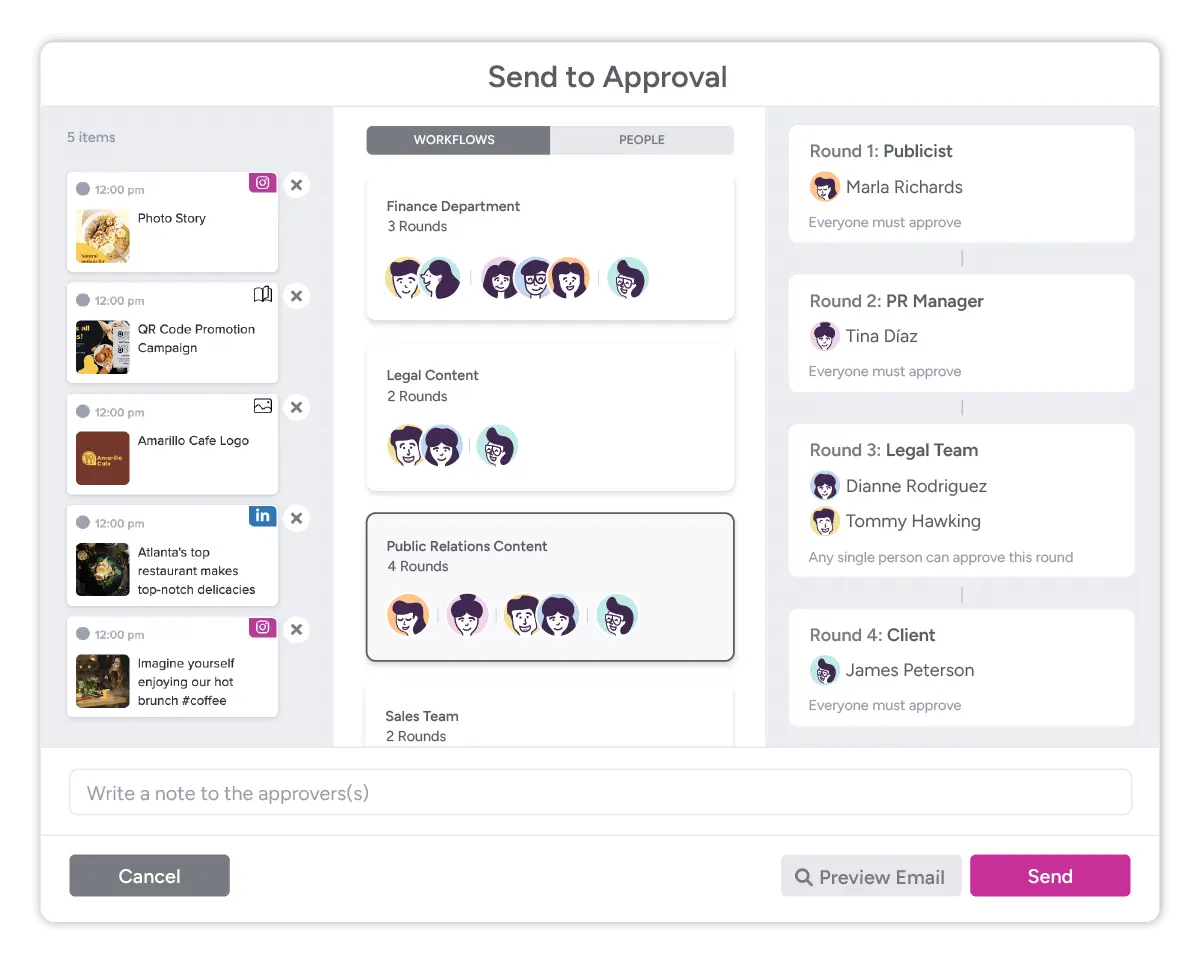
- Build multi-step approval workflows around your teams: Create reusable, multi-step workflows that route content to the right people in the right order. For example, your legal team can review product claims before the marketing director gives final sign-off. Gain automatically moves content through each stage and sends reminders along the way to prompt reviewers to act.
- Keep feedback tied to the content: Legal team can annotate PDFs, request changes, and leave comments directly on assets. Marketing reviewers can use mentions and tasks to address concerns without juggling disconnected email threads or second-guessing which feedback is current.
- Make sign-offs easy: Approvers receive secure magic links that let them approve content or request changes in one click, without creating an account.
- Keep a complete record of every approval: Gain automatically documents every comment, change request, and sign-off in a time-stamped activity history right next to the content. You can see exactly who approved what and when, and download the full record whenever you need to verify decisions or provide documentation for compliance purposes.
FAQs
A legal review process involves checking marketing materials for potential legal or regulatory issues before they’re published. This may include verifying advertising claims, reviewing disclaimers, checking intellectual property permissions, and ensuring promotional content meets applicable requirements.
Not always. Depending on the organization and the nature of the content, legal approval may be handled by in-house counsel, a designated compliance professional, or another authorized reviewer. However, matters requiring legal judgment should be handled by a qualified legal professional.
Content involving advertising claims, customer testimonials, promotional offers, regulated products, or sensitive information may require legal review. The exact requirements depend on the organization’s industry, applicable laws, and internal policies.
To Sum Up
In large organizations, getting stakeholders from different departments to approve content is no easy feat. The marketing team is focused on launch deadlines, the legal team is scrutinizing claims, and leadership has its own priorities.
But most of these challenges can be prevented with a streamlined approval process, clearly defined responsibilities, and a tool like Gain to support collaboration across departments.
Try Gain free for 14 days and bring your entire content approval process into one place.