As AI makes it easier to generate more content across more channels, one question becomes increasingly urgent: what does the content review and sign-off process actually look like right now for marketing teams and agencies?
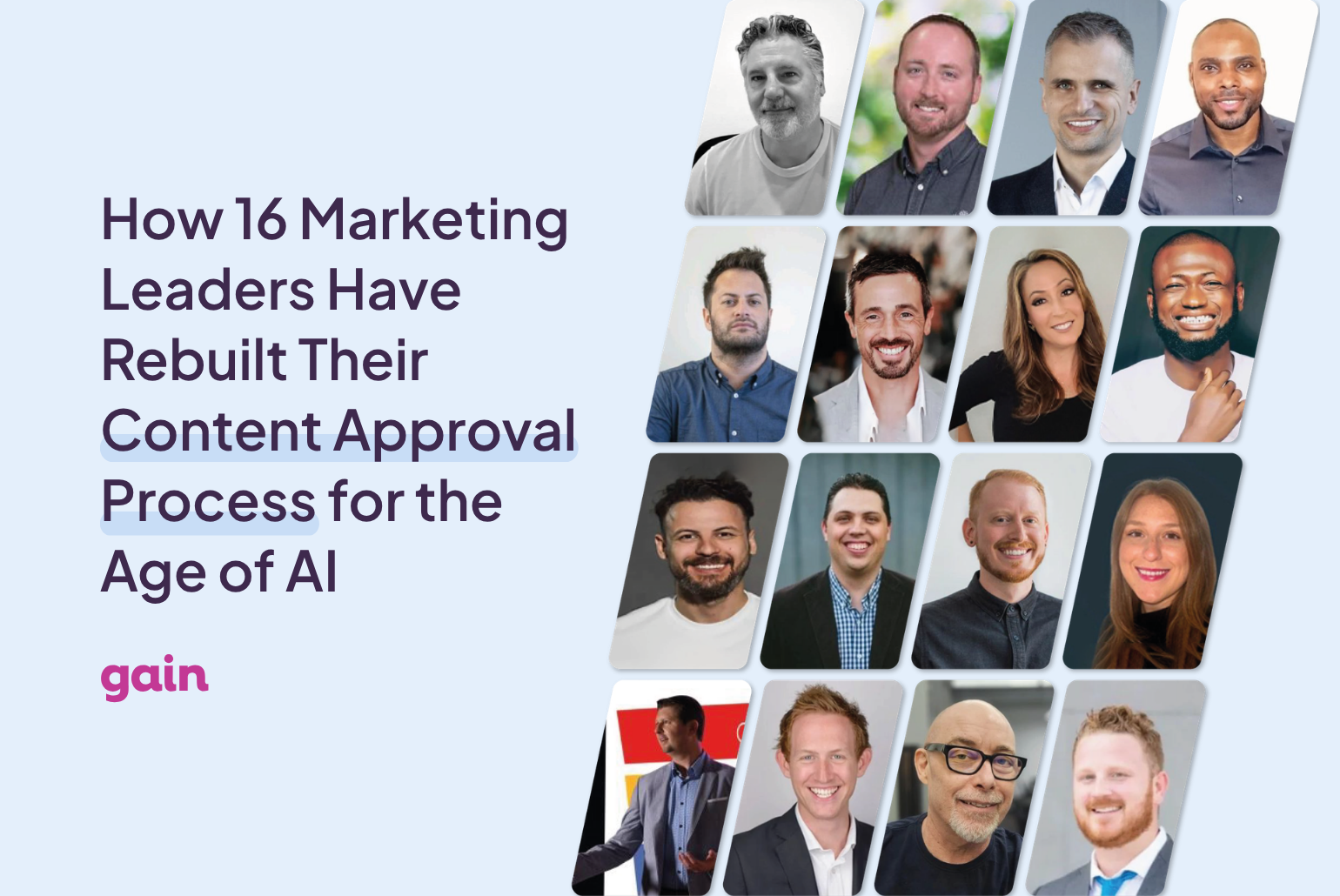
We asked 16 marketers and agency leaders to answer it honestly. What is working, what is breaking, and how are teams maintaining quality at a volume that would have been impossible two years ago.
The Bottleneck Has Moved from Production to Review
Ask any marketing team what changed most when AI entered their workflow, and the answer is almost always the same: speed. Teams that can generate 10x the content are still running it through approval processes built for a fraction of that volume. The result is backed-up queues, reviewer fatigue, and sign-off quality that quietly degrades under pressure.
Kriszta Grenyo, COO at Suff Digital, puts it plainly:
“The volume is the thing that breaks legacy review chains, so smart teams are pushing more of the consistency work upstream into prompts, style guides, custom GPTs, and shared brand assets, instead of trying to inspect everything at the end. The main bottleneck right now is review capacity, not generation capacity.”
Bryan Osima, Founder of Uvietech Software Solutions Inc., sees the same dynamic with his clients, and pushes back on the idea that technology alone can fix it:
“Scaling content output is the easy part. Scaling thoughtful review is still a people problem, not a software problem. What’s working is keeping the human review layer non-negotiable, even when there’s pressure to skip it.”
The pressure compounds fast. Khris Steven, Founder of KhrisDigital, learned what happens to review quality when volume goes unchecked:
“We spotted this early on in our inspection of 60 products in one week and saw the approval criteria slipping away from the 50 percent mark. Having a hard stop rule between volume targets and review rounds maintained our approval quality stable. Reviewers get tired, and it sneaks up on you before you realize it has taken its toll on the approval quality.”
His fix? A hard cap on how many pieces a single reviewer handles per day — is operationally awkward, he admits. But it’s cheaper than the alternative.
The Best Teams Front-load Quality Control
If the review stage is overloaded, the answer most experts have landed on isn’t a faster review. It’s doing the quality work earlier, at the brief or prompt stage, so that by the time content reaches a reviewer, most of the problems have already been designed out.
Ulf Lonegren, Partner and Co-founder at Roketto, has the numbers to back this up. After implementing what he calls a “brand toolkit” approach (pre-approved templates, locked assets, swipe files of prior successful posts), his team’s internal content rejection rate dropped from 28% to 4%. Senior sign-off time fell from an average of 18 minutes per long-form piece to under 4 minutes.
“When content creators are forced to generate content within the confines of these pre-approved, templated assets, it really changes the nature of the signoff workflow. It prompts the executive approvals to become what they should be — fast, quick, and easy.”
Corey Larson, COO at Outlier Creative Agency, runs a legal-only agency where every piece carries bar compliance weight on top of brand standards. His team arrived at the same conclusion:
“Our fix was building practice-area-specific content briefs that lock tone, approved terminology, and compliance guardrails before any AI prompt is written. The brief is the filter, not the final review. That distinction saved us from chasing errors downstream and made sign-off faster because the boundaries were set upstream.”
Kelly Rossi, Founder and CEO of Marketing Magnitude, frames it as resetting what the review stage is actually for:
“What’s actually working right now is building the brand constraints into the brief before content gets written, not after. If the input is specific enough — audience, intent, tone, what the business does NOT want to sound like — the review stage becomes a quick confirmation rather than a full rewrite.”
Clear Ownership Beats Committee Sign-off
Several experts arrived at the same conclusion independently: shared approval doesn’t distribute responsibility; it dilutes it. When too many people have sign-off authority, reviews become slow, subjective, and inconsistent. The teams getting this right have moved toward single, named owners at each stage with clear criteria and clear accountability.
Stephen Taormino, Founder and CEO of CC&A Strategic Media, has spent 25 years watching this problem compound with every new channel:
“What AI has done is expose a structural weakness that was already there: most teams never had a real sign-off system; they had a habit of whoever had time doing a quick read before hitting publish. The approval bottleneck at scale almost always traces back to one thing: no single owner of brand voice. Someone needs decision-making authority over what sounds like the brand, and that person needs criteria, not just instincts.”
Christopher Coussons, Director at Visionary Marketing, runs every piece of AI-assisted content through three named gates, each owned by a different person and each answering a different question:
“Gate 1 is factual accuracy, reviewed by the analyst closest to the data. Gate 2 is the brand voice, reviewed by the strategist who owns the client account. Gate 3 is strategic intent, reviewed by a senior strategist or me. This is the gate where the most expensive mistakes get caught — content that’s accurate and on-voice but irrelevant to the campaign’s strategic priority.”
Scott Kasun, Digital Marketing Executive at ForeFront Web, makes the same point from the opposite direction:
“If too many people own approval, quality drops and speed dies. For AI-assisted content, I want one person checking brand voice, one person checking accuracy/SEO intent, and one person giving final go/no-go if needed. Otherwise, you get project delays, messy messaging, and endless subjective edits.”
Michael Maximoff, Co-founder and Chief Growth Officer at Belkins, adds a dimension most responses miss: the reviewers should include business stakeholders, not just content teams.
“Human review happens throughout the entire process, starting from the brief creation, building the SME questions, reviewing the first draft, deciding which insights should be added and why, and then finally approving the content before publishing. Subject matter expertise matters a lot more now that AI can generate content so easily.”
Not All Content Deserves the Same Level of Scrutiny
Treating every piece of content the same way creates two problems at once: it over-reviews low-risk assets and under-reviews high-risk ones. The teams managing volume well have moved to tiered approval models, where the level of scrutiny matches the potential consequences of getting something wrong.
Matt Bowman, Founder of Thrive Local, describes how his team separated content by business risk after AI entered their daily production:
“Routine SEO updates and lighter internal copy can move through AI-supported workflows tied to approved brand standards. But higher-visibility materials like executive thought leadership, product launch messaging, and compliance-sensitive landing pages still stay under direct human writing, editing, and final approval from senior team members.”
Tom Parling, CEO of Growthvibe, makes a related point about how the review criteria itself need to be tiered, and why standard brand guidelines don’t translate cleanly to AI:
“What actually works is translating those guidelines into concrete and testable instructions. Sentence length ranges, specific words to use and avoid, and structural patterns for different content types. When AI has precise inputs, the outputs become far more consistent, and sign-off cycles drop significantly. You should match your oversight level to the risk level of each content type instead of treating them all the same. Routine social posts need lighter review than a long article going out under a founder’s name.”
Marc Bishop, Director at Wytlabs, highlights an often-overlooked benefit of structured review: the feedback loop it creates over time.
“AI output improves when review comments become training inputs. Common edits get translated into prompt rules, examples, and approval guardrails. Over time, fewer drafts fail basic brand or compliance expectations.”
Without a Single System, Messaging Drifts and Accountability Disappears
When approvals happen across email, Slack, shared docs, and project management tools, two things happen consistently. Versions get confused. And no one can prove what was approved, by whom, and when. At low volume, that’s manageable. At an AI-driven scale, it becomes a liability.
Zack Bowlby, CEO of ROI Amplified, describes what the absence of a single system actually costs:
“The real bottleneck is making sure every version says the same thing across landing pages, ads, blogs, emails, and social, because once messaging fragments, attribution gets messy and execs stop trusting the output. What’s working is treating approval like an ops workflow, not a creative opinion session. We use a clear chain: strategy brief first, then channel owner review, then brand/compliance check, then final publish approval inside the same workflow so nobody is chasing edits across email, Slack, and docs.”
Andy Zenkevich, Founder and CEO of Epiic, points to a specific failure mode that scattered approval processes make worse: AI hallucination that slips through because the review wasn’t rigorous enough.
“One of the most dangerous types of AI content is experiential hallucination. AI inevitably makes up personal anecdotes and customer wins. We treat our AI like a structure-builder, and the meat of that structure is a human editor’s add-in during the review process. We wouldn’t go live with a claim about a product or client situation unless we can point to a specific place in our CRM or project that backs it up.”
Aaron Whittaker, VP of Demand Generation and Marketing at Thrive Internet Marketing Agency, experienced the cost of a fragmented system firsthand and rebuilt around a single-owner approval path to fix it:
“This role-based ownership solved our earlier bottleneck where too many reviewers created overlapping edits and delayed launches. During a recent campaign cycle, this streamlined workflow allowed us to produce more than 200 AI-assisted assets in under five weeks, while reducing major revision requests by nearly 69% compared to an earlier cycle with a much looser approval structure.”
The Pattern Underneath All of It
Across every response, the clearest predictor of quality at scale was process clarity: front-loaded briefs, single owners, tiered scrutiny, and a system where approvals don’t fall through the cracks.
That last piece is harder than it sounds when content moves across channels, departments, and stakeholders simultaneously. Gain is a content approval platform that allows you to route every piece of content through a defined approval workflow before anything gets published, keep a complete record of every approval decision, and ensure nothing goes live until the right people have signed off.