A lot of people assume TikTok is for dancing teens, not decision-makers. And that assumption has kept plenty of B2B brands on the sidelines for years. But here’s the thing: B2B buyers are humans first. They scroll TikTok on their lunch break, save videos to watch later, and yes, they discover new tools and services on the platform.
TikTok has crossed 1.9 billion active users globally, and the audience is maturing fast. Millennials and Gen Z now make up more than 71% of B2B decision-makers. If those are your buyers, there’s a real chance they’re already on TikTok. The question isn’t whether your audience is there. It’s whether your brand is showing up for them.
So, can TikTok actually work for B2B? Let’s dig in.
Why B2B Brands Are Paying Attention to TikTok
For a long time, TikTok felt impossible to justify for B2B marketers. Fun to watch, sure. But a legitimate marketing channel? That conversation is changing fast.
What’s shifted is how people actually use the platform. TikTok isn’t just for entertainment anymore. Younger audiences increasingly turn to it to discover products, research brands, and find solutions to problems they’re actively trying to solve. That matters for B2B, because the people making purchasing decisions are getting younger, and their research habits look very different from the LinkedIn-and-webinar playbook most B2B brands are built around.
There’s also a thriving professional side of TikTok that often flies under the radar. Communities built around marketing, finance, entrepreneurship, and career growth have become genuinely active spaces where conversations happen and opinions form. B2B brands that know how to use TikTok for business are already showing up in these spaces, building awareness with the exact audiences they want to reach.
The Real Challenges of B2B on TikTok
Of course, it’s not all smooth sailing. There are genuine challenges that make TikTok a trickier channel for B2B brands, and it’s worth going in with clear eyes.
The biggest one is content culture. TikTok rewards raw, authentic, and often entertaining content. B2B brands are used to producing polished, carefully reviewed materials, which can feel completely out of place on the platform. Finding the balance between staying on-brand and being genuinely watchable takes real creative effort.
There’s also the nature of the sales cycle. B2B purchases take time, and TikTok is a scroll-and-swipe environment. Expecting a 30-second video to generate a qualified lead directly isn’t realistic. TikTok works best as a brand awareness and trust-building channel, not a direct-response one.
And then there’s the resource reality. Video content takes time, skill, and consistency. For lean marketing teams working with a small social media budget, adding TikTok to an already full content schedule can feel overwhelming. None of these challenges are dealbreakers, but they’re worth acknowledging before you dive in.
What Makes B2B TikTok Content Actually Work
The brands seeing real results on TikTok have figured out one key thing: the goal is to educate, not to sell.
TikTok’s most effective B2B content leans into “edutainment”:
- Quick tips
- How-to’s
- Industry insights
- Behind-the-scenes looks that deliver genuine value in under a minute
Founder-led and team-led content also performs well. When someone from the company shows up authentically, sharing a lesson learned or walking through their workday, it humanizes the brand in a way that no polished campaign can replicate.
And don’t overlook TikTok SEO. Using relevant keywords in captions, on-screen text, and audio can make your content discoverable to people actively searching for solutions.
Real-world Examples of B2B Brands Doing TikTok Right
Still on the fence? Here are three B2B brands that are making TikTok work, and what you can learn from them.👇
Shopify
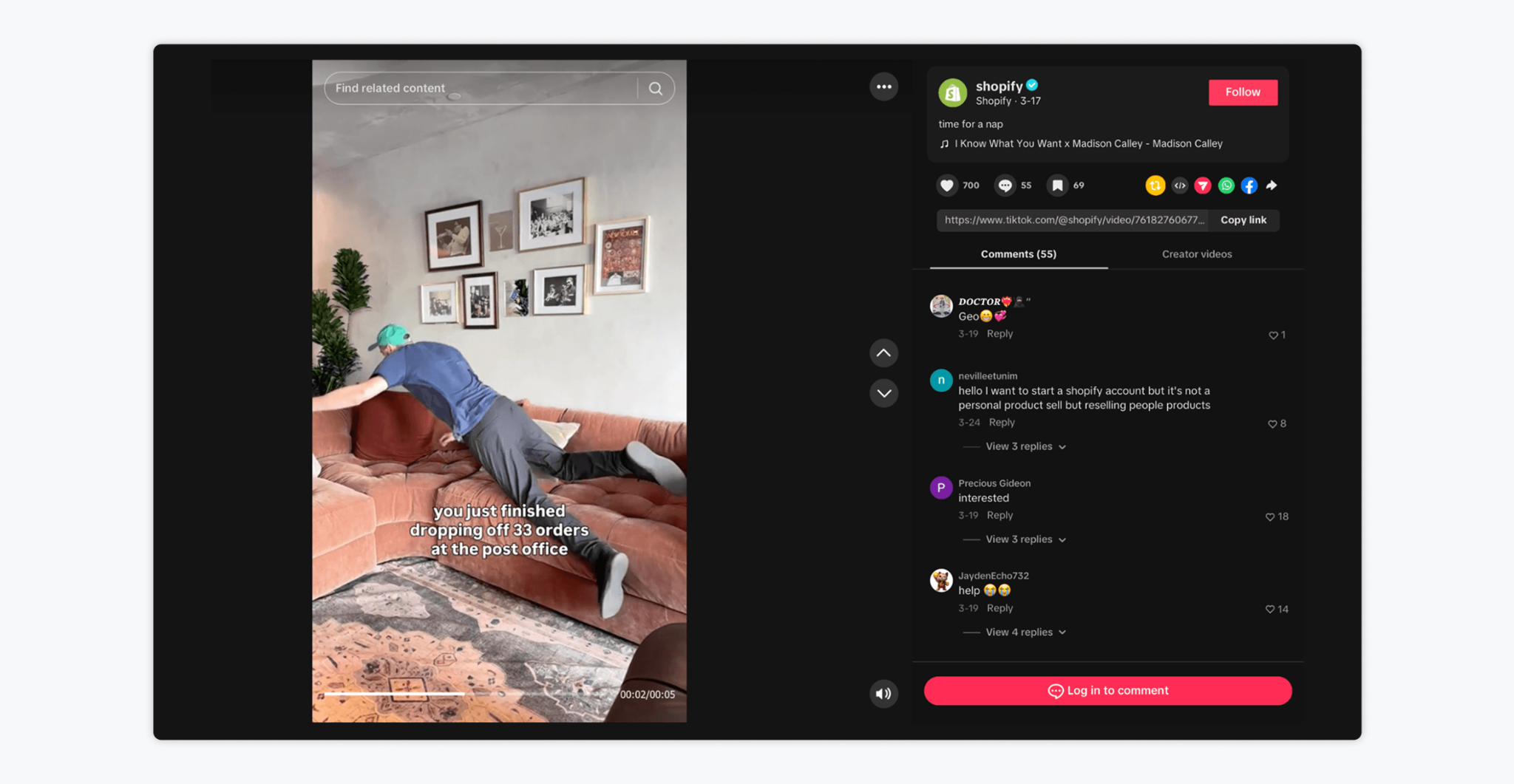
Shopify has built a strong TikTok presence by focusing on its audience’s ambitions, not its own product features. Their content is packed with entrepreneurship tips, small business success stories, founder spotlights, and fun, humorous videos. By centering the people they serve rather than the software they sell, Shopify comes across as a brand that genuinely gets its community. It’s a masterclass in audience-first thinking.
HubSpot
HubSpot leans into marketing and sales tips with a tone that’s refreshingly human. They use relatable formats, including trending audio, conversational talking-head videos, and the occasional bit of humor, to make complex B2B concepts feel approachable. Their TikTok channel feels nothing like a corporate marketing playbook, which is exactly why it works.

Adobe
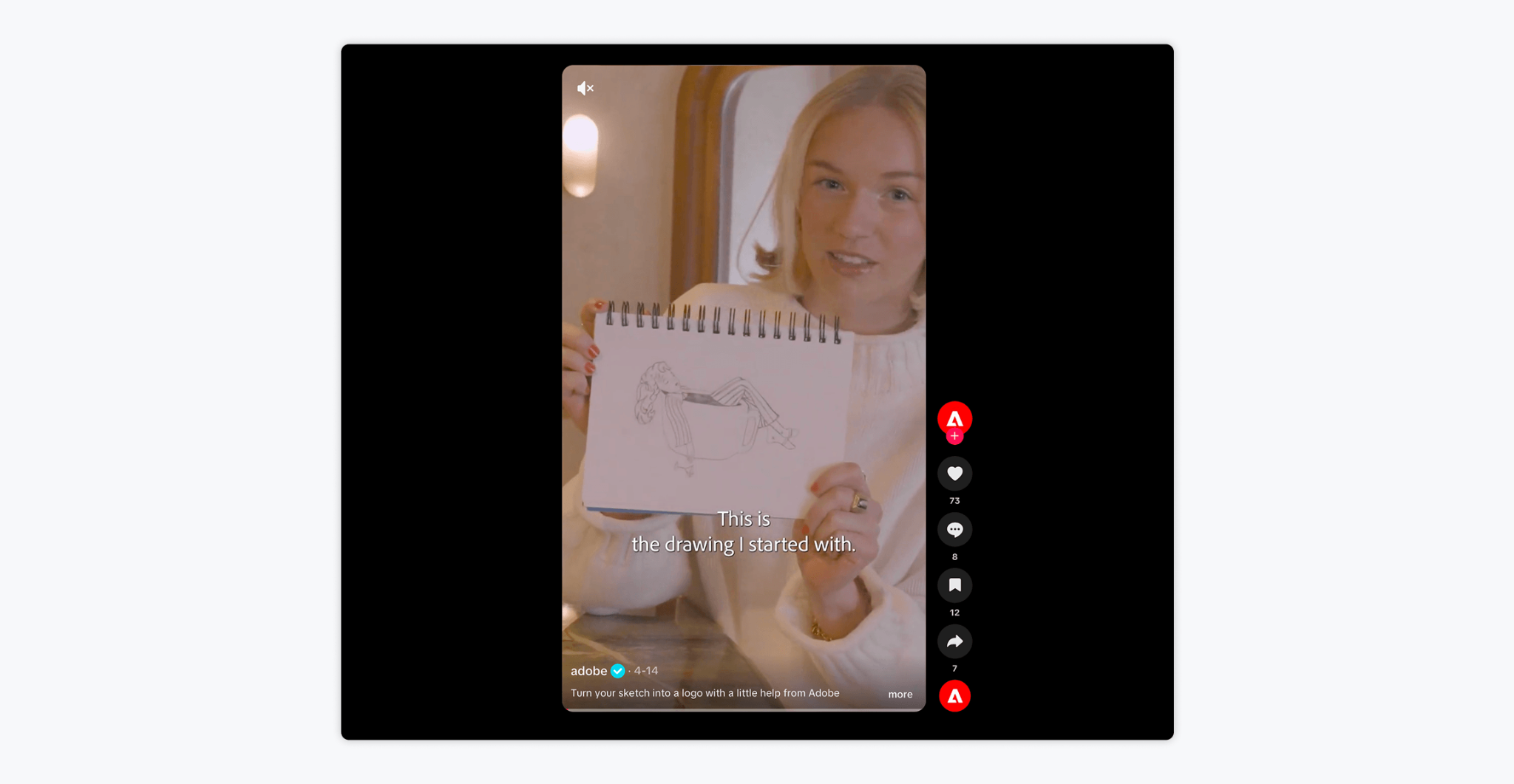
Adobe uses TikTok to showcase creative tutorials and behind-the-scenes content featuring designers and creators. It’s educational, visually compelling, and positions Adobe as a brand embedded in the creative community rather than just selling to it. Their content inspires and informs at the same time, which keeps people coming back.
The common thread across all three? None of them lead with product pitches. They lead with value, and the brand awareness follows naturally.
How to Build a B2B TikTok Strategy That’s Worth Your Time
Ready to give TikTok a serious shot? Here are five steps to build a strategy that actually moves the needle.
Step 1: Define Your Goal Before You Post Anything
The biggest mistake B2B brands make on TikTok is jumping into content without a clear objective. Before you film a single video, get specific about what you want TikTok to do for your brand.
- Are you building awareness with a new audience?
- Driving traffic to a landing page?
- Positioning your team as thought leaders?
- Attracting top talent?
Each goal calls for a different content approach, a different posting rhythm, and different success metrics. Brand awareness means tracking reach and follower growth. Thought leadership means looking at saves and comments. Traffic means monitoring link clicks and conversions.
Without a defined goal, you’ll produce content that feels unfocused and measure success in ways that tell you nothing useful. Start with the why, and everything else falls into place.
Step 2: Spend Time on TikTok as a Viewer First
Before you create, consume. Spend at least a week genuinely exploring TikTok in your industry niche before publishing anything. Search hashtags relevant to your space, follow competitors and industry voices, and pay attention to what formats are getting traction, what hooks people are using, and how long the best-performing videos run.
What works on LinkedIn rarely translates directly to TikTok. The more time you invest as a viewer first, the better you’ll understand what your audience actually wants to see, and the less time you’ll waste creating content that misses the mark.
Step 3: Build a Content System You Can Actually Sustain
Consistency beats perfection on TikTok every time. The algorithm rewards accounts that show up regularly, which means you need a creation process that doesn’t burn you out after two weeks.
Batch filming is one of the most effective approaches: set aside a few hours once or twice a week to film multiple videos at once, then schedule them out. Build a simple content bank where you capture ideas as they come, so you’re never staring at a blank screen. A solid TikTok growth strategy is less about chasing viral moments and more about showing up reliably for a specific audience. Aim for three to five posts per week to build momentum, but only commit to a cadence you can realistically sustain long term.
Step 4: Treat TikTok Like a Search Engine
There’s a growing number of users who now turn to TikTok to find tips, tutorials, and recommendations rather than heading straight to Google. And that’s something you should tap into.
When posting on TikTok, use relevant keywords naturally in your captions, incorporate them as on-screen text overlays, and say them out loud in your audio since TikTok’s algorithm picks up spoken words too. Think about the phrases your target audience would actually search for, and build content that answers those questions directly. Strong hashtag use still matters, but keyword-rich captions and on-screen text are increasingly what drives discoverability. Treat every video as a piece of searchable content.
Step 5: Connect TikTok to Your Wider Marketing Mix
TikTok works best when it doesn’t exist in isolation. Think about how it fits into your broader funnel and what role it plays alongside your other channels. A video that performs well on TikTok can often be repurposed for Instagram Reels or LinkedIn with minor adjustments for tone and format, stretching your content investment further.
Your TikTok presence can also drive traffic to longer-form assets like blog posts, lead magnets, or landing pages, making it a powerful top-of-funnel tool that feeds the rest of your strategy. When planning your B2B social media content ideas, think about how themes and messages can travel across platforms.
FAQs
Most recommendations suggest posting between 3 and 5 times per week to build momentum. Consistency matters more than volume, so it’s better to post three quality videos per week reliably than to post every day for two weeks and then burn out. Find a pace you can sustain.
Not at all. Some of the most effective B2B TikTok content is filmed on a smartphone with natural lighting. What matters most is value, relevance, and consistency. A clear point of view and a willingness to show up authentically will take you much further than a high production budget ever will. That said, having a bigger budget can help with things like paid promotion, editing support, creator partnerships, or producing content at scale. But it is not the deciding factor.
Search TikTok for your industry keywords, customer pain points, competitors, product categories, and questions your buyers ask. If you find relevant creators, comments, or conversations, that’s a good sign your audience may be active there. You can also test a few weeks of content and track views, saves, comments, profile visits, website clicks, and lead quality. If the right people engage, your B2B audience is likely on TikTok.
Final Thoughts
TikTok is a legitimate channel for B2B brands willing to show up authentically and play the long game. The brands winning on TikTok aren’t necessarily the ones with the biggest budgets. They’re the ones with the clearest strategy and the most consistent presence. Are you brave enough to be one?
Adding TikTok to your social media mix means more content to create, more stakeholders to loop in, and more approvals to chase down. If your team is still managing that process through email threads and shared spreadsheets, things will get messy fast. That’s where Gain comes in.
Gain is a platform built for agencies and marketing teams that need to publish and approve marketing content quickly without cutting corners. You can create dedicated workspaces for each client, run automated content approval workflows that follow up with the right people at the right time so you don’t have to, and auto-publish content the moment it’s approved.