AI was supposed to make content production more efficient. And it has. But for some marketing teams, that extra speed has created a new problem: more content waiting to be reviewed than people have time to properly check.
It’s also forcing teams to question whether their existing content approval process still makes sense. When content volume increases, sending every piece through the same review steps can quickly become impractical.
We asked 8 marketing and agency professionals to share how they’re adapting, what changes they’ve made to their workflows, and what’s actually helping them keep approvals moving.
1. Not Every Piece of AI Content Needs the Same Level of Review
There’s a general consensus among marketers that not every piece of AI-generated content should go through the same level of review. The risk simply isn’t the same across every format and content type.
A routine social post, for example, may only need a quick check. Content published under an executive’s name, sent to the press, or involving sensitive claims needs much closer attention.
Kuber Sharma, Enterprise AI Strategist and Go-to-Market Leader at UiPath, says one of the biggest mistakes teams make is adding approval gates everywhere instead of deciding what actually requires deeper scrutiny:
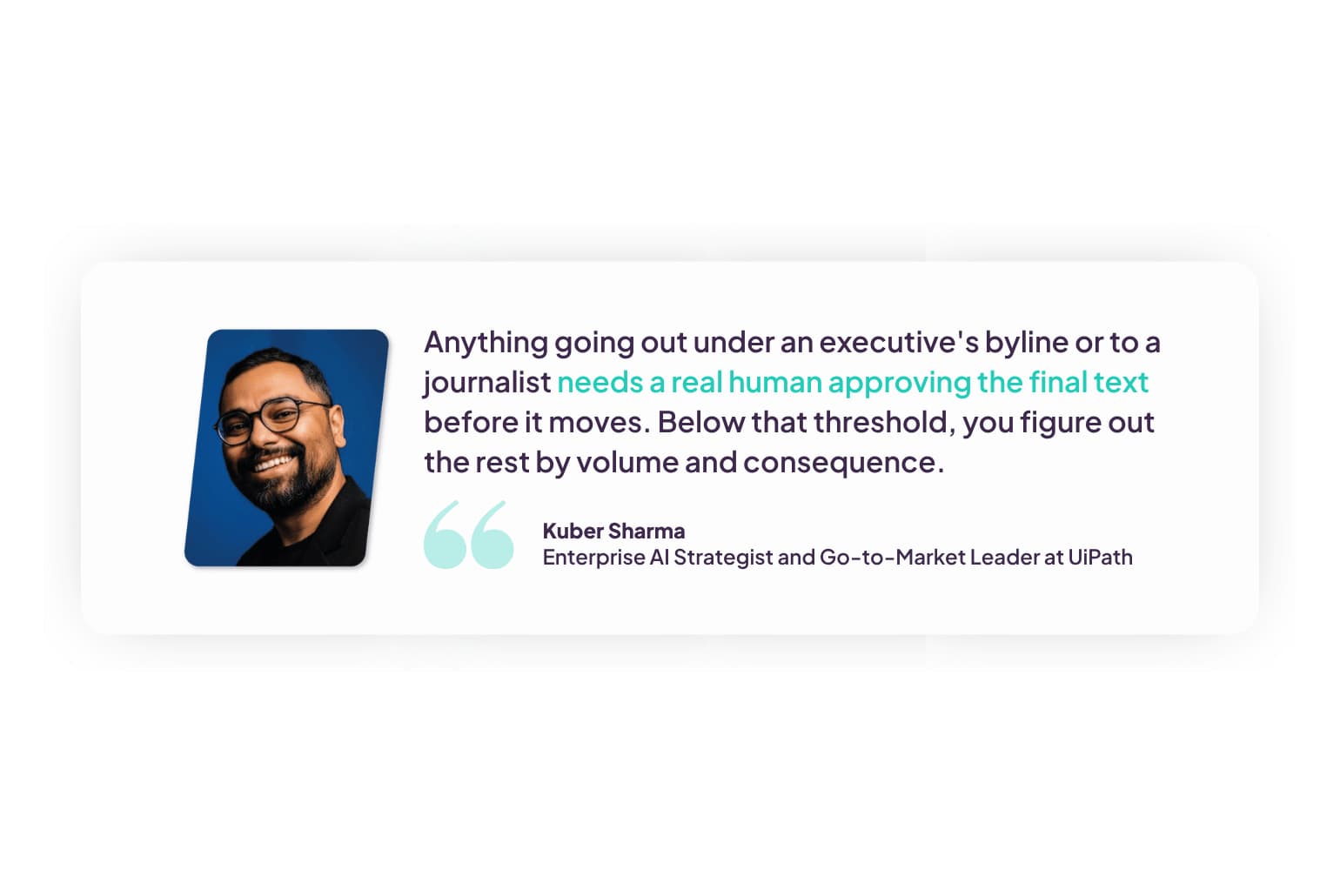
The practical takeaway is to classify content by risk and build the approval process around those differences. That way, teams can spend more review time where mistakes carry the biggest consequences without creating unnecessary delays for everything else.
2. Let Review Capacity Set the Pace
Another common theme is that teams are learning not to let AI dictate how much content they produce. Just because a tool can generate dozens of drafts quickly doesn’t mean there’s enough time to review them properly.
Riley Beresini, Founder of Chasing Next, recommends starting with the amount of human oversight the team actually has:
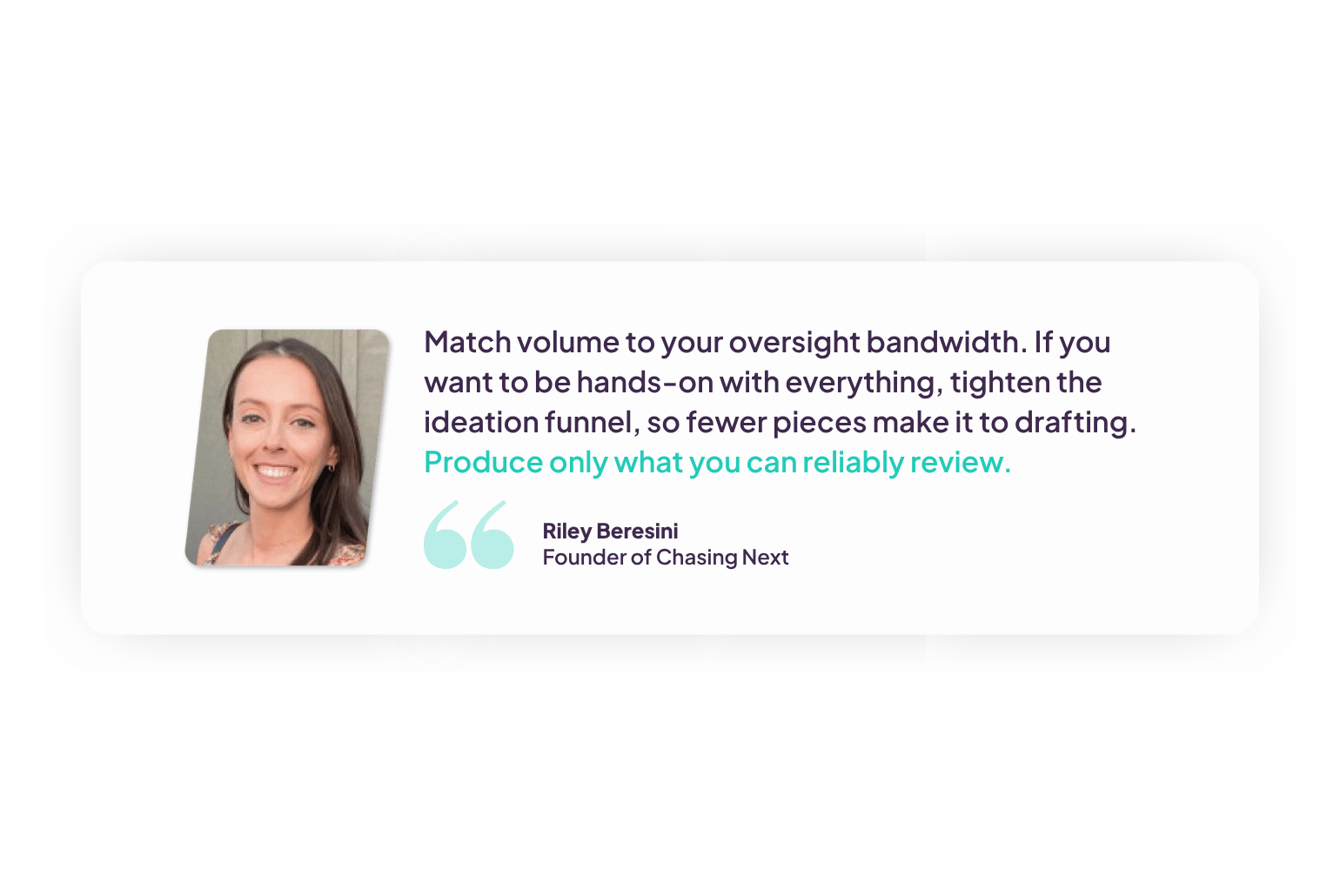
That means being more selective about what gets created in the first place. Otherwise, teams can end up with a growing backlog of drafts that still need editing, fact-checking, and approval.
For many teams, the better approach is to set a realistic review capacity first, then produce to that level. It keeps the workload manageable and gives people enough time to properly check the content before it goes out.
3. Be Deliberate About How Much AI Does
Not every team is responding to higher content volume by trying to speed up approval. Some are limiting how much of the content process they hand over to AI in the first place.
Ann-Marie Green, Head of Marketing at Know Roaming, says her team is careful about using AI for written content because they still want the end result to feel personal and relatable.
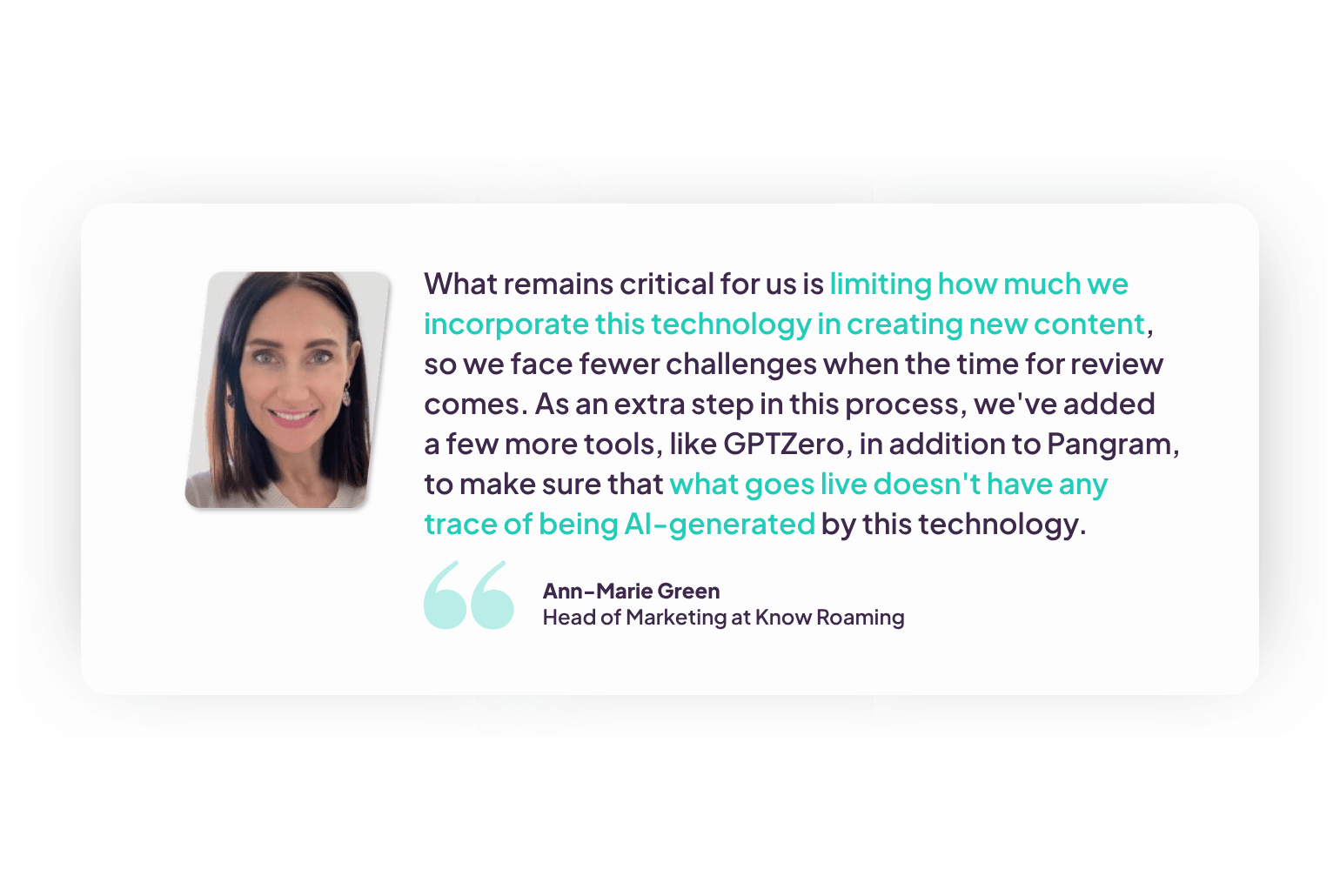
For her team, AI is more useful for specific tasks, such as cutting irrelevant information, than for producing an entire piece from start to finish. Human input still plays a big role in making the writing feel natural and on-brand.
Her point is a useful reminder that reducing an approval bottleneck doesn’t always mean changing the review process. Sometimes it means being more selective about where AI is used before content ever reaches review.
4. Move Approval Earlier in the Process
One way teams are reducing review bottlenecks is by approving the direction before AI starts producing a full draft.
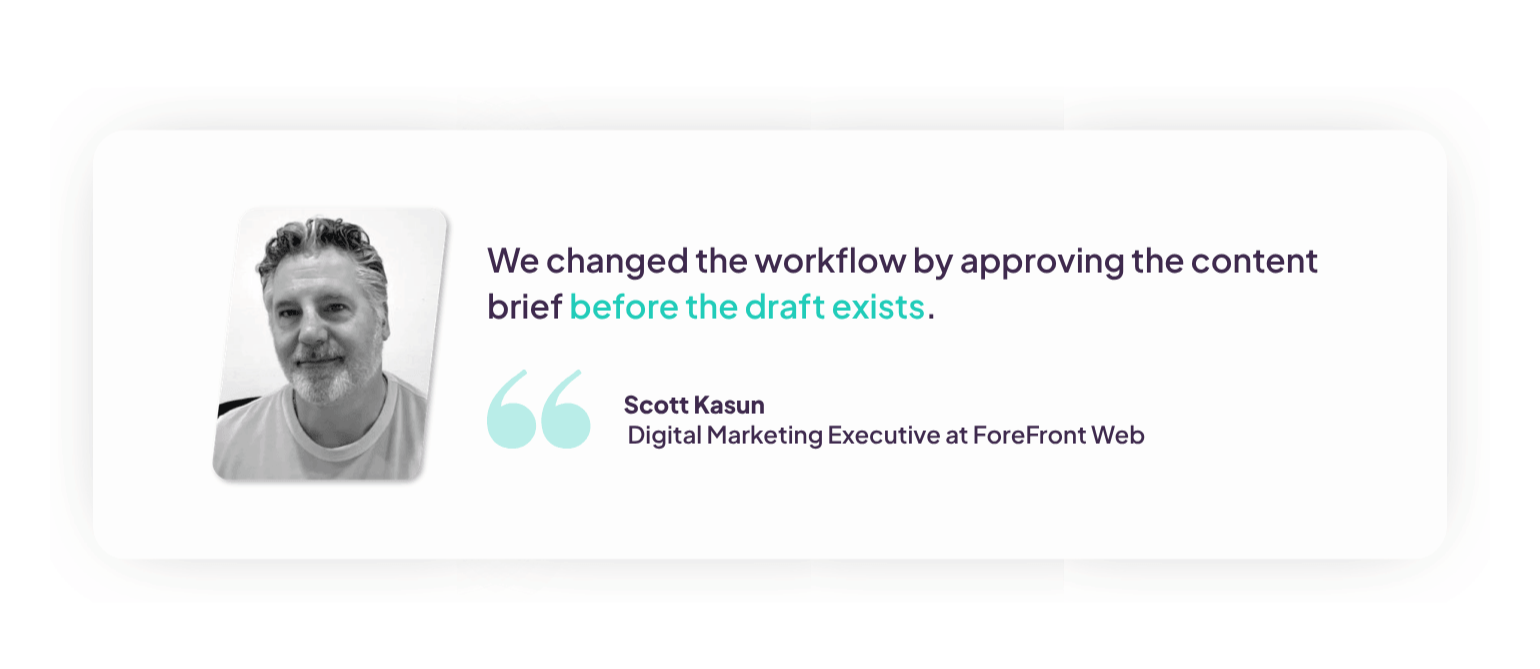
Scott Kasun, Digital Marketing Executive at ForeFront Web, says his team now agrees on the content brief first, including the search intent, questions to answer, internal links, CTA, and any claims or sources that need to be used.
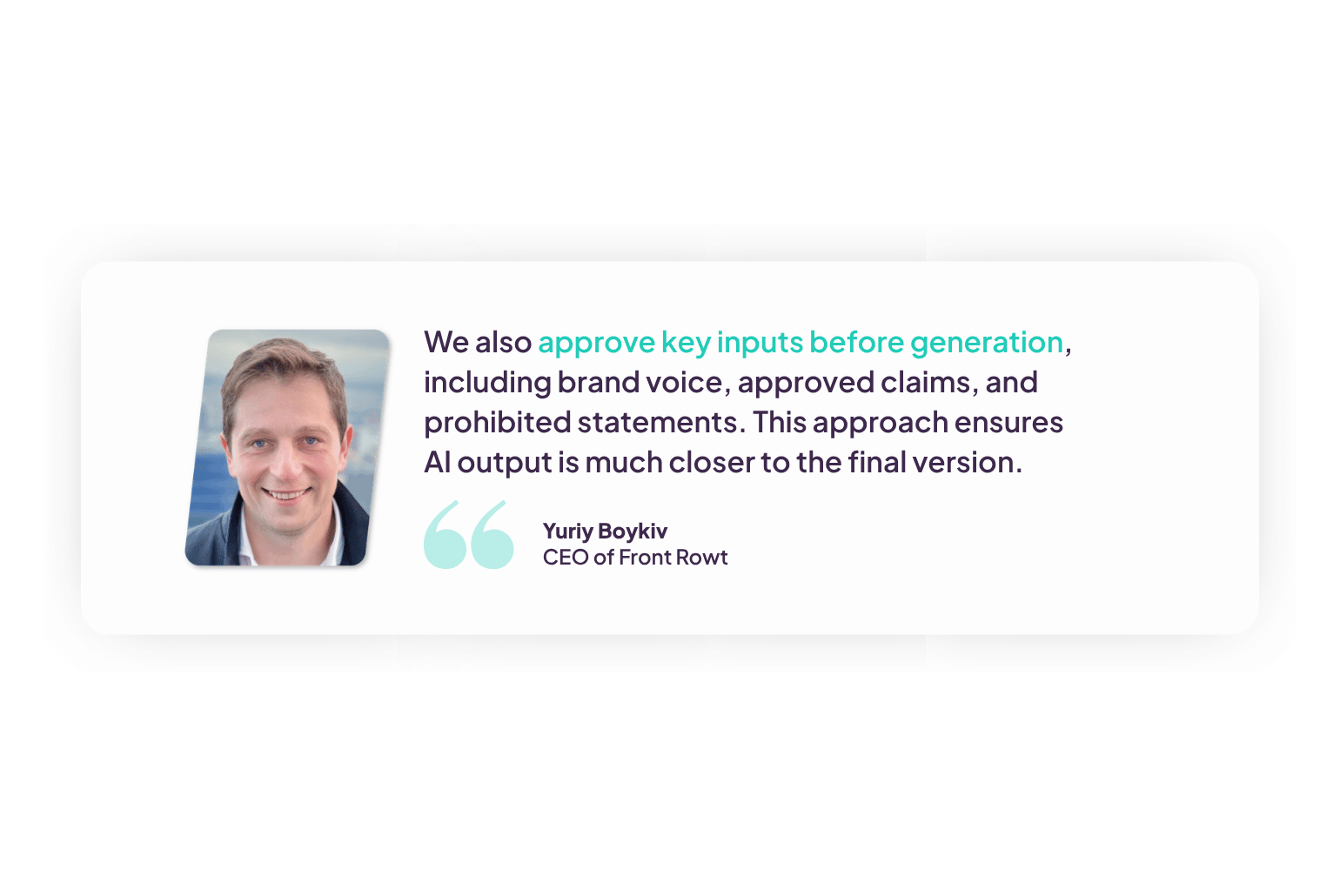
Yuriy Boykiv, CEO of Front Row, follows a similar approach by setting clear boundaries before generation starts:
The thinking behind both approaches is straightforward: if the important decisions are made earlier, there’s less to fix once the draft reaches review.
5. Watch for Reviewer Fatigue and Brand Voice Drift
Even with a better approval process, there are still some problems that are harder to solve. One of them is reviewer fatigue.
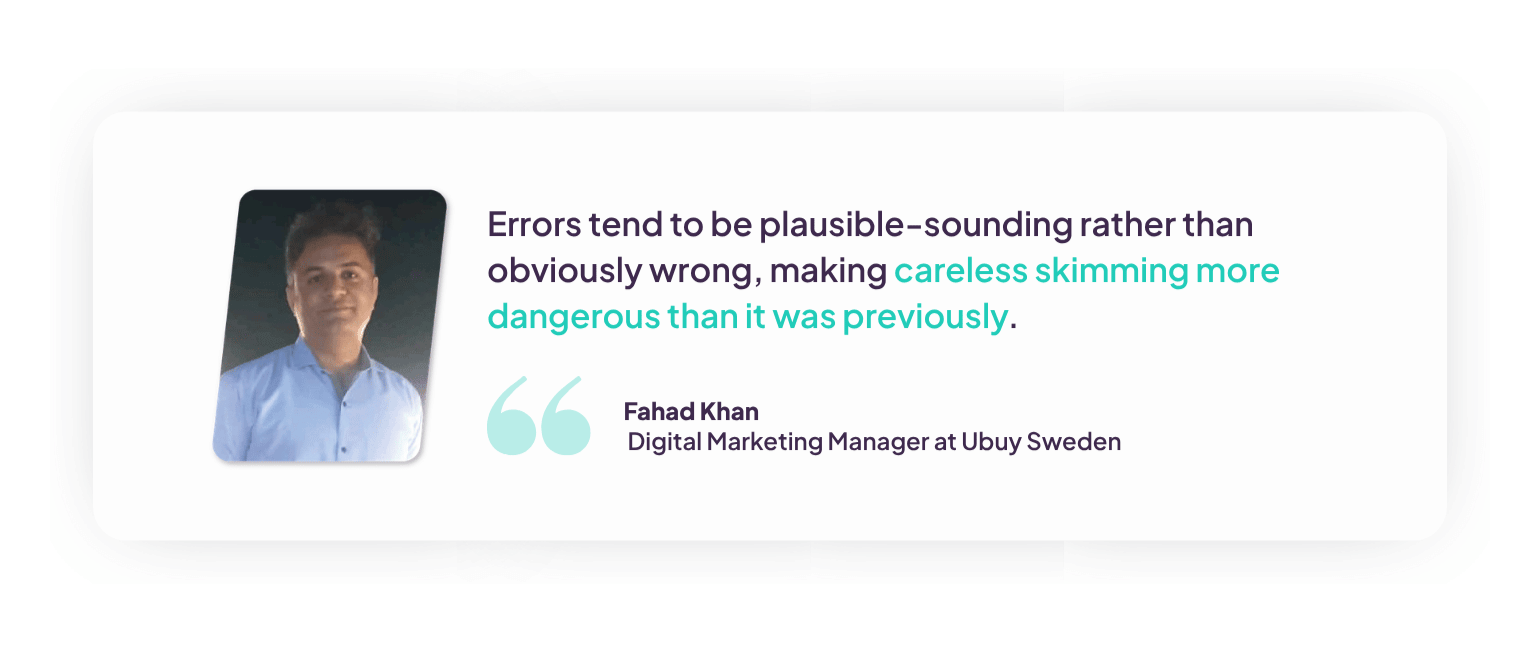
Fahad Khan, Digital Marketing Manager at Ubuy Sweden, says AI content often requires a different kind of attention because the mistakes aren’t always obvious:
Brand voice can also become harder to protect as AI-generated content scales. Daniel Nyquist, CMO at Crosslist, found that even strong reviewers could miss when AI output started to feel too generic.
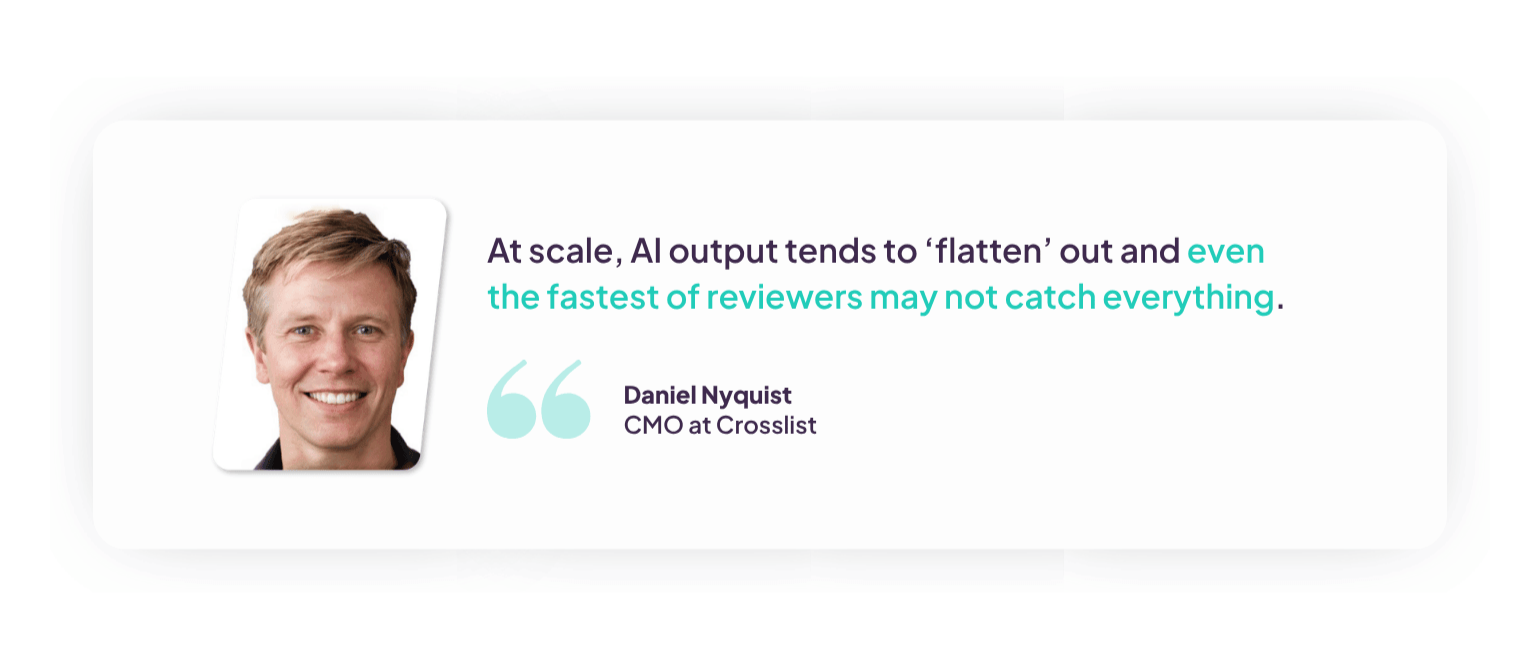
His team introduced a four-question brand voice checklist for every piece before publication. It added around two minutes to each review, but reduced post-publish edits by 60%.
So while faster workflows can help with volume, teams still need to account for the limits of human attention and the subtle quality issues AI can introduce.
6. Protect Your Most Experienced Reviewers’ Time
AI approval bottlenecks can also happen when too much content is being sent to the same senior reviewers, even when much of it could be handled by someone else.
David LoPresti, Founder of ADA Compliance Professionals, says his senior auditors were spending too much time on line edits instead of focusing on higher-risk issues. His team introduced a tiered review system, with junior reviewers handling low-risk content and senior reviewers reserved for work with greater legal or compliance implications.
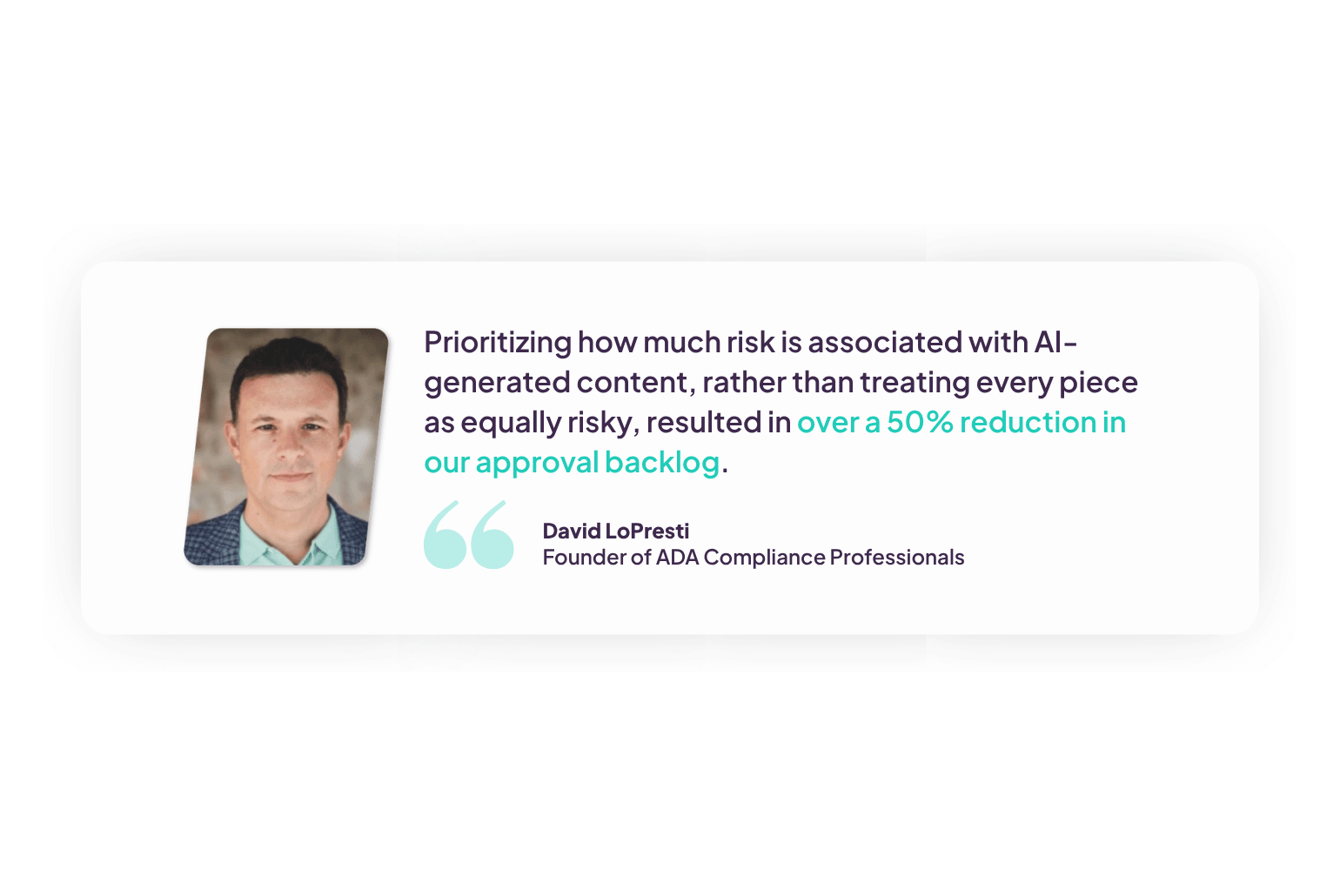
LoPresti says the change also freed up senior auditors to spend more time on substantive liability-related work.
Closing Thoughts
AI is pushing marketing teams to become much more intentional about content approval. When more content can be produced in less time, teams need clearer rules around what gets reviewed, who needs to be involved, and how much scrutiny each piece actually requires.
And speaking of content approvals, that’s exactly where Gain can help.
Gain gives marketing teams and agencies one place to manage content approvals across social posts, files, documents, videos, and more. You can build customizable approval flows, route content to the right stakeholders, and keep a clear record of who approved what and when.