Are you in the real estate business and wondering how to market your brokerage or listing more effectively?
Real estate marketing covers a lot of ground — from property listings and social media posts to email campaigns, paid ads, videos, brochures, and neighborhood content. And with that much to cover, many teams can quickly feel overwhelmed or struggle to keep their marketing consistent across every channel.
In this guide, we’ll walk you through the most important real estate marketing dos and don’ts to keep in mind. We’ll also share a few real-world examples from real estate agents and agencies to show what some of these best practices can look like across different types of marketing content.
First of All, What Is Real Estate Marketing?
Real estate marketing is the process of promoting properties, agents, brokerages, or other real estate services to potential buyers, sellers, renters, and investors.
It can include:
- Property listings
- Social media content
- Email campaigns
- Blog posts
- Paid ads
- Videos
- Brochures
- Neighborhood guides
For real estate businesses, marketing usually has two goals: generating interest in current properties and building long-term awareness and trust around the agent or brokerage. The exact mix of channels will vary by audience and market, but the goal is the same — to get the right properties and expertise in front of the right people.
Benefits of Running Marketing Campaigns in Real Estate
A well-planned marketing campaign can do more than help sell a single property. It can also strengthen your brand, attract future clients, and keep your business visible in a competitive local market.
Some of the main benefits include:
- More visibility for listings: Reach a larger pool of potential buyers across multiple channels.
- Stronger brand awareness: Help people recognize your agency or agents over time.
- More qualified leads: Target campaigns toward specific buyer, seller, or investor audiences.
- Better local positioning: Build authority around particular neighborhoods, cities, or property types.
- More opportunities to stay top of mind: Keep in touch with prospects who may not be ready to buy or sell yet.
- Greater trust and credibility: Consistent, useful marketing can make your business feel more established and reliable.
Which Marketing Channels Work Best for Real Estate?
The best real estate marketing channels depend on your audience, location, and the type of properties you promote. In most cases, a mix of owned, paid, and social channels works best.
- Social media: Great for listings, short-form video, market updates, and agent visibility.
- Email marketing: Useful for nurturing leads, sharing new listings, and staying in touch with past clients.
- SEO and blog content: Helps attract people searching for neighborhoods, buying advice, or local market information.
- Paid advertising: Can put listings or lead-generation campaigns in front of highly targeted audiences.
- Real estate listing platforms: Important for reaching active buyers already searching for properties.
- Video marketing: Useful for property tours, neighborhood content, and educational explainers.
- Direct mail: Still relevant for local farming, seller outreach, and neighborhood-specific campaigns.
Are There Any Laws or Regulations Governing Real Estate Marketing?
Yes. In the U.S., real estate marketing is subject to several federal, state, and local rules.
One of the most important is the Fair Housing Act, which prohibits housing discrimination based on race, color, national origin, religion, sex, familial status, or disability. That applies to advertising too, including how housing ads are written, targeted, and delivered online.
Real estate advertising must also follow the FTC’s truth-in-advertising standards. Claims should be accurate, not misleading, and supported when necessary.
On top of that, individual states may have their own advertising, licensing, and disclosure requirements. So before publishing a campaign, it’s worth making sure property details, claims, targeting, and required disclosures have been reviewed by the appropriate person.
Now, onto the dos and don’ts.
Real Estate Marketing Dos and Don’ts
There’s no single formula for marketing real estate well, but there are a few practices that consistently make campaigns more focused and effective.
Below, we’ll cover five things worth doing — and three common mistakes that can weaken your results.
Do Define Your Target Audience
Not every property should be marketed to the same buyer. Before you choose channels or start creating content, get clear on who you’re trying to reach.
A first-time buyer looking for a condo will respond to different messaging than a luxury buyer, an investor, or a homeowner considering whether to sell.
Think about:
- Location
- Budget
- Property type
- Lifestyle
- Where that audience is most likely to spend time online
That should shape everything from the language in your ads to the topics you cover in your blog and the platforms you prioritize.
The more specific you are about the audience, the easier it becomes to create marketing that feels relevant instead of generic.
Do Create Useful Content Beyond Listings
Many real estate agents upload a property to sites like Zillow, Realtor.com, or Redfin and think, “That’s it. My job is done here.”
But a listing is only one piece of your marketing.
Consider creating content that helps people before they’re ready to book a viewing or contact an agent. That could mean neighborhood guides, local market updates, buyer and seller FAQs, mortgage explainers, moving checklists, or blog posts about what it’s actually like to live in a particular area.
A good example is Compass, which has a dedicated section of its website for New York City neighborhood guides. Instead of focusing only on available properties, the guides help prospective buyers explore different areas of the city and understand what living in each neighborhood is like
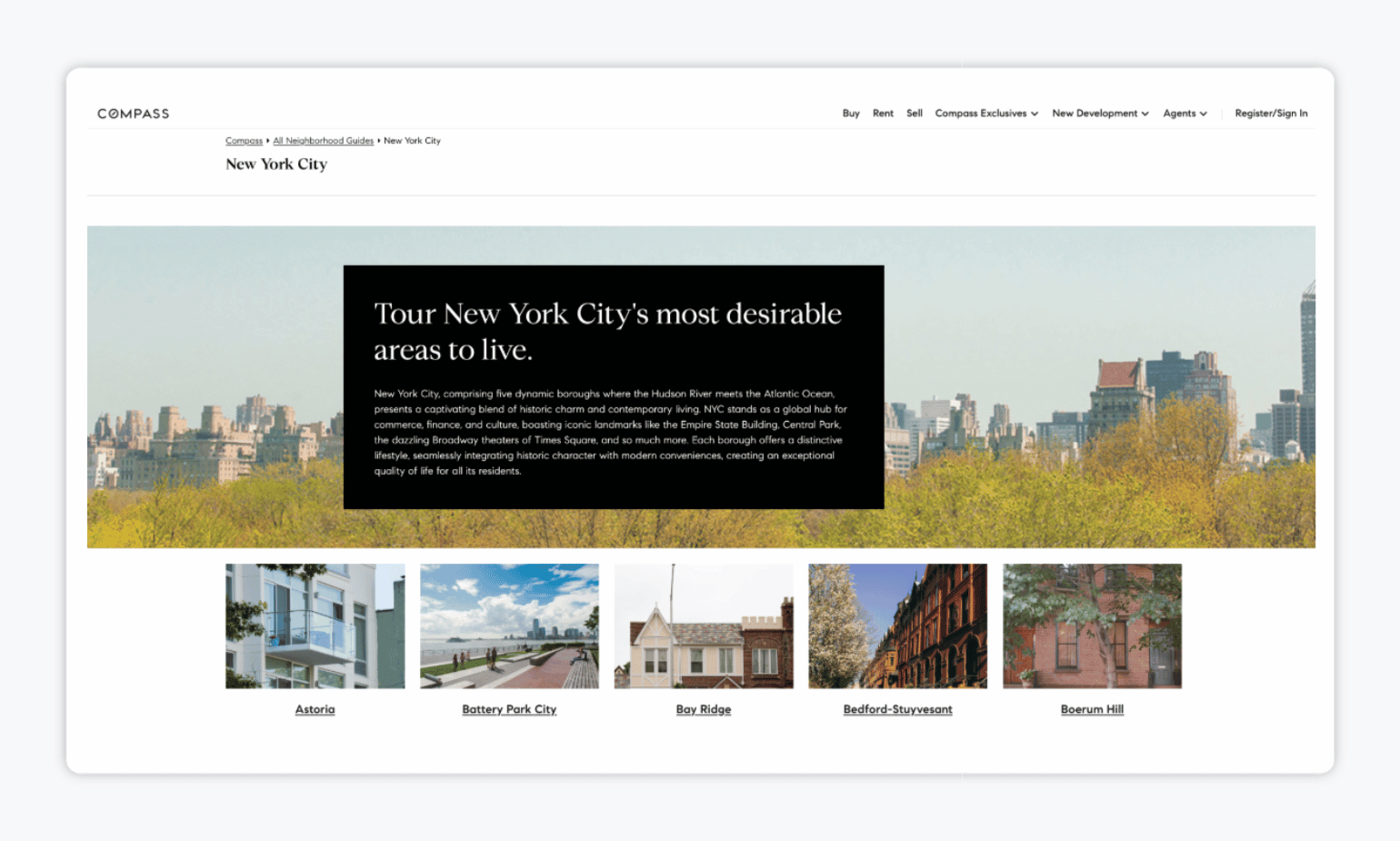
The goal is to give prospects a reason to keep engaging with your brand between transactions. Useful content builds familiarity over time, so when someone is finally ready to buy, sell, or invest, your name is already on their radar.
Do Use Social Media to Build Visibility and Trust
Social media is a huge lever in real estate marketing. If you aren’t active on platforms where buyers and sellers already spend time, you’re missing out on a lot of opportunities to stay visible and build familiarity.
Select a few platforms that allow you to publish visual content, such as Instagram and TikTok, and focus on formats your team can produce consistently.
Consider creating content around:
- New listings and property walkthroughs
- Neighborhood tours and local recommendations
- Market updates and pricing trends
- Buyer and seller FAQs
- Home staging or preparation tips
- Behind-the-scenes content from open houses or shoots
- Short videos that introduce agents and show their personality
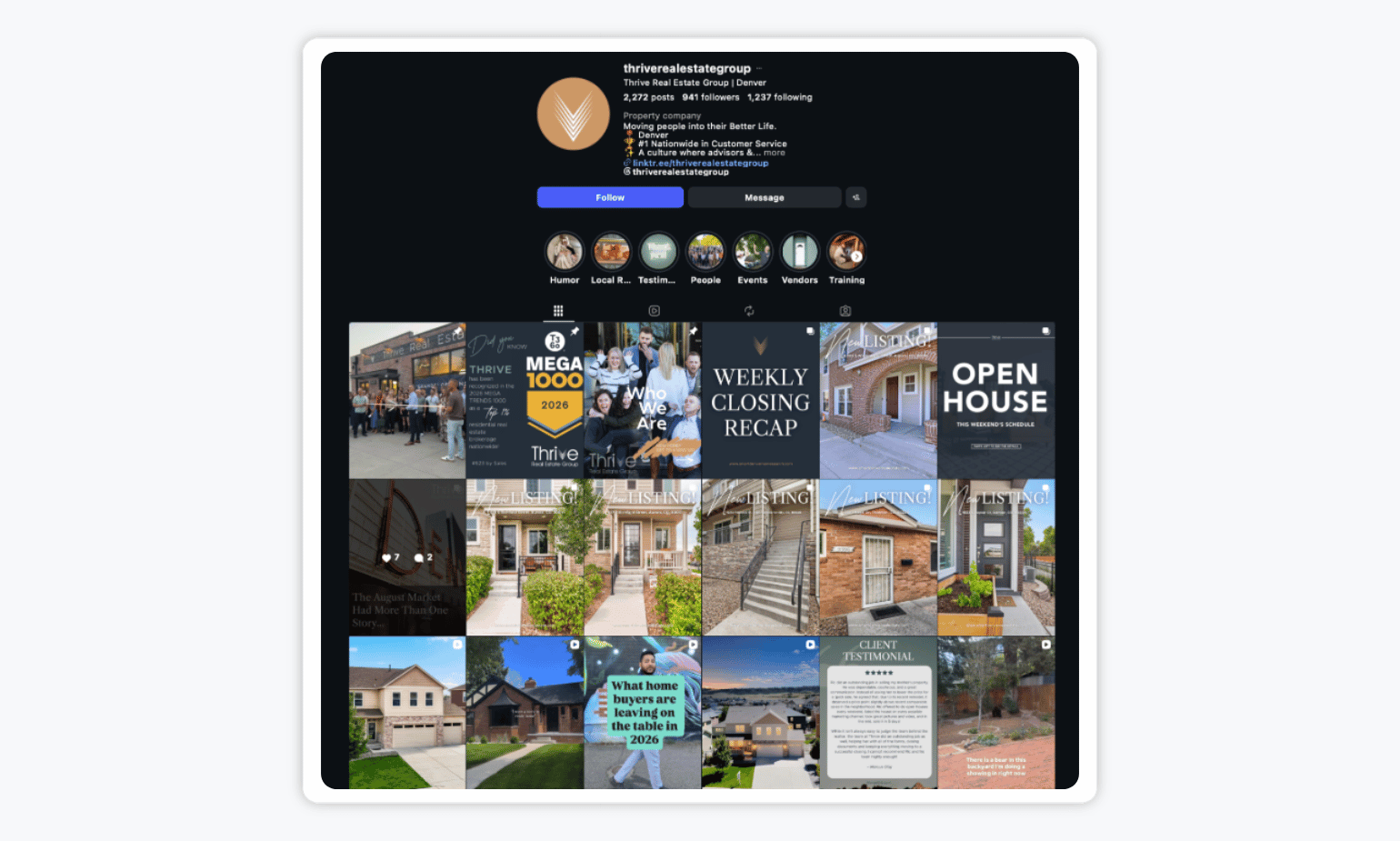
Thrive Real Estate Group is a good example of a team using Instagram for more than just listings. Its feed mixes new properties and open houses with market commentary, client testimonials, team content, and local updates, which helps the brand feel active and useful rather than purely promotional.
Do Run Targeted Paid Advertising Campaigns
Organic marketing can only take you so far. Paid ads can help you put listings, lead magnets, and brokerage campaigns in front of people who are actively searching or fit a specific buyer or seller profile.
Google Search ads work well for high-intent queries, while Meta ads can help you reach local audiences with property videos, open-house promotions, or seller campaigns. Retargeting can also bring back people who viewed a listing or visited your website without taking action.
📖 Related Read: How to Run Instagram Ads in 2026 (+Costs)
This is a good example of how paid search can capture high-intent demand.👇
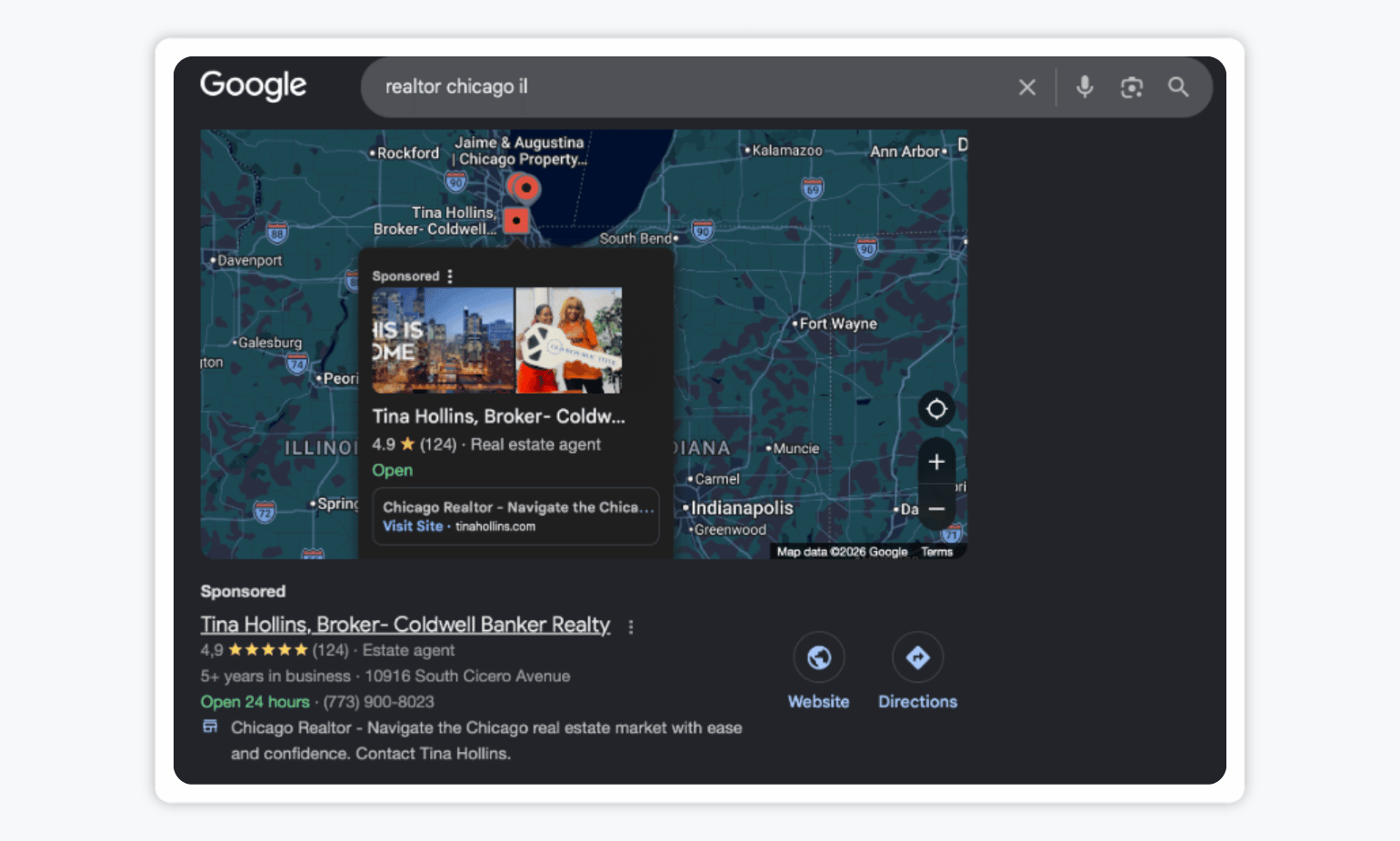
Tina Hollins appears as a sponsored result for “realtor chicago il,” putting her brokerage directly in front of people who are already searching for a local real estate professional.
💡 Pro tip: Build a separate landing page for each major ad campaign instead of sending paid traffic to your homepage. Match the page to the ad’s message, location, and property type so visitors immediately see the information they clicked for — and you can measure that campaign’s performance more accurately.
Do Optimize Your Website and Listings for Search
If buyers and sellers can’t find you on Google, that’s not good. Many real estate searches start on Google, so your business MUST show up there!
Start by thinking about what a potential client might search for, such as “homes for sale in Austin,” “realtor in Miami,” or “best neighborhoods in Denver.” Semrush is a useful tool for this because it shows you how often people search for a keyword and suggests related phrases. Even its free version lets you run up to 10 keyword searches per day.
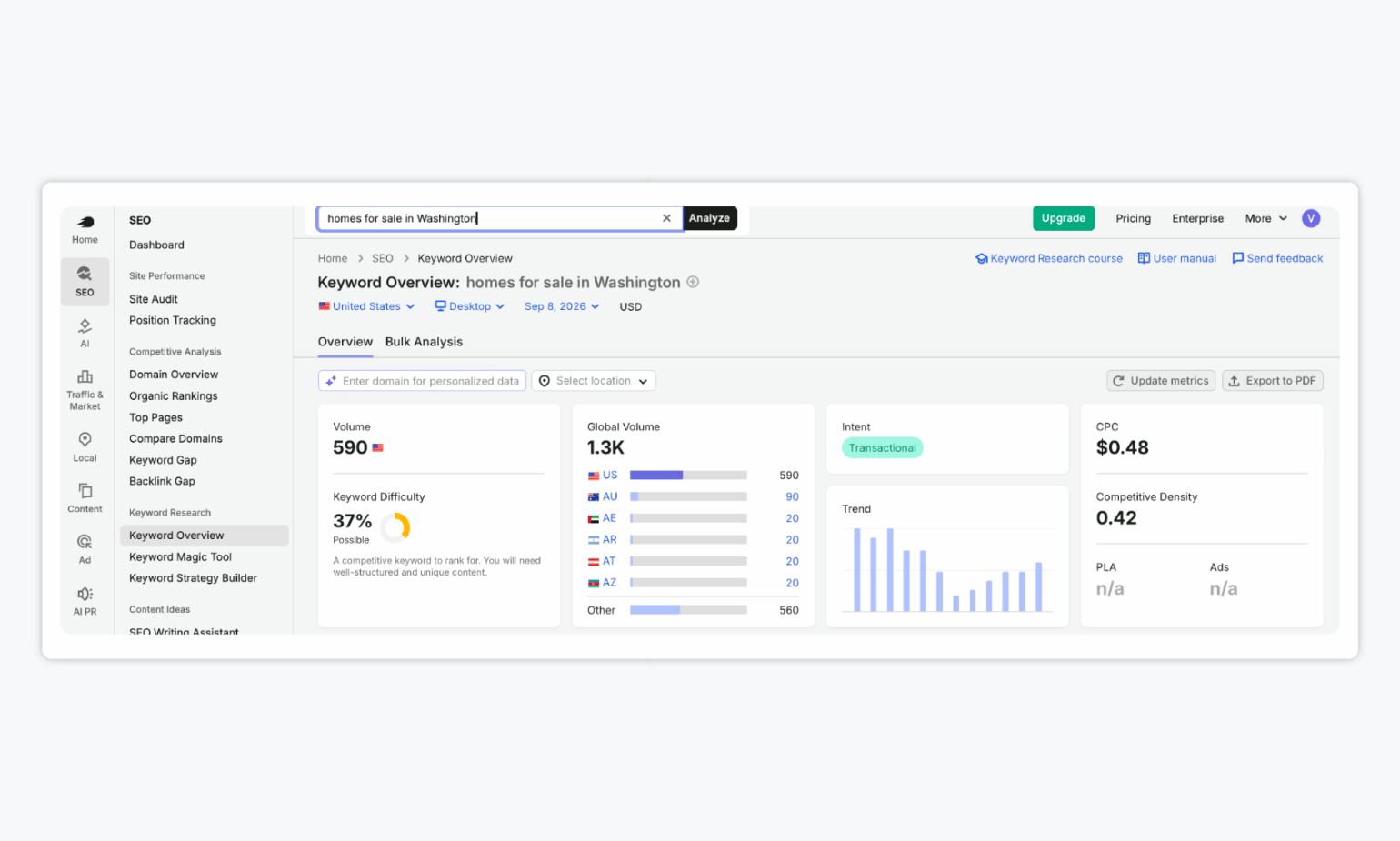
For example, a Semrush search for “homes for sale in Washington” shows an estimated 590 U.S. searches per month and a 37% keyword difficulty score, which Semrush labels as “possible.”
That tells you two useful things: people are actively searching for the term, and the competition is manageable enough to make it worth targeting. A real estate business serving Washington could create a dedicated page around that keyword, then support it with relevant listings, neighborhood pages, and related blog content.
🎯 The goal is simple: help Google understand what you offer and where you operate, so your website has a better chance of appearing when potential clients search.
Alright, you’ve got a solid list of ways to make your real estate marketing more effective. Now, let’s look at the no-nos — from trying to be everywhere at once to overloading your audience with promotional content or launching campaigns without a clear goal.
Don’t Spread Your Budget Across Too Many Channels at Once
It’s tempting to be everywhere: Google Ads, Instagram, TikTok, Facebook, email, direct mail, SEO, and YouTube. But that can quickly dilute your budget and your team’s attention.
Instead, focus on the channels that make the most sense for your audience and market. If most of your leads come from Google and Instagram, invest there first and get those campaigns working well before adding another platform.
The same applies to content production. A smaller number of well-maintained channels will usually serve you better than six accounts that are updated inconsistently.
Start with two or three core channels, track the results, and expand only when you know you have the budget and resources to do it properly.
📖 Related Read: Small Social Media Budget? Here’s How to Maximize It
Don’t Rely Only on Promotional Content
If every post, email, or campaign says “Just listed,” “Open house,” or “Contact me today,” your marketing can start to feel repetitive very quickly.
People may follow a real estate brand for months, or even years, before they’re ready to buy or sell. Give them a reason to keep paying attention in the meantime.
Mix promotional content with useful information, such as market updates, neighborhood guides, buyer and seller tips, FAQs, local recommendations, and explainers around the buying process.
Don’t Run Campaigns Without a Clear Goal
Before you launch any real estate marketing campaign, decide what you actually want it to achieve.
- Are you trying to generate buyer inquiries for a specific property?
- Attract homeowners who may be thinking about selling?
- Get more traffic to a neighborhood page?
- Grow your email list?
The answer should shape the campaign itself, including the message, channel, call to action, and the metrics you track.
For example, a campaign designed to generate seller leads should be measured by form submissions or consultation requests, not just impressions or likes.
Without a clear goal, it’s easy to spend money on campaigns that look busy but don’t tell you whether they’re helping the business.
Set the objective first, then choose the metrics that show whether you’re actually getting there.
FAQs
The best strategies usually combine search engine optimization (SEO), social media, email marketing, paid ads, useful educational content, and strong property listings. The right mix depends on your audience, location, and goals.
Some of the strongest social media ideas for real estate include listing walkthroughs, new-to-market teasers, open-house promotions, neighborhood spotlights, market updates, price changes, just-sold posts, and buyer or seller education. Agent-led content is also a smart strategy, because people often choose an agent as much as they choose a brokerage. Showing the agent’s expertise, personality, and local knowledge can help build familiarity and trust before a prospect is ready to make a move.
It depends on your team’s skills, budget, and workload. In-house marketing gives you more control and usually makes it easier to stay close to agents and listings. Outsourcing can be useful when you need specialist support with SEO, paid ads, design, or content production. Many real estate businesses use a hybrid approach, keeping strategy in-house while outsourcing specific tasks.
Make Your Real Estate Content Easier to Manage With Gain
Strong real estate marketing takes more than good ideas. You also need a reliable way to review everything before it goes live, especially when your team is juggling social posts, listing graphics, brochures, videos, PDFs, and other marketing content at the same time.
Gain is a content approval platform for marketing teams and agencies. It lets you send social posts, files, documents, and other content through customizable approval workflows, keep feedback in one place, and maintain a clear record of who approved what and when.
Whether you’re looking to approve a neighborhood guide before it goes live on your website or an Instagram Reel featuring a virtual property tour, Gain gives everyone involved one place to review the content and sign off on the final version.