
Photo by Ahmed
Managing a social media presence when you’re a small brand is one thing. Managing it when you have dozens of teams, multiple product lines, offices across continents, and a legal department that needs to sign off on everything is a completely different challenge. Enterprise social media is where good strategies can get complicated — fast.
The good news is that the brands doing it well have proven that scale doesn’t have to mean chaos. With the right governance structure, clear workflows, and the right tools, you can run a social media operation that’s consistent, compliant, and genuinely engaging.
In this guide, you’ll learn how to do enterprise social media the right way, with real-world examples from brands that are leading the way.
What Makes Enterprise Social Media Different
Ask any social media manager at a Fortune 500 company what makes their job hard, and they’ll give you the same answer: it’s not the content creation, it’s the coordination.
At the enterprise level, you’re not managing one brand on three channels. You’re often managing multiple brands, sub-brands, or regional accounts, each with their own audiences, compliance requirements, and stakeholders who need to weigh in before anything goes live.
The content approval chains alone can add days, sometimes weeks, to a content cycle. Legal needs to review for compliance. The branding team needs to check for consistency. Regional teams want to adapt global content for local audiences. And somewhere in the middle of all that, the social media manager is trying to keep a content calendar moving.
Add to that the reputational risk that comes with operating at scale. A tone-deaf post from a regional account can become a global headline overnight. That risk calculus changes everything about how enterprise teams approach content creation, review, and publishing.
The Pillars of a Strong Enterprise Social Media Strategy
A strong enterprise social media strategy starts with a clear framework that keeps every team, channel, and campaign aligned. Here are the four pillars that hold it together:👇
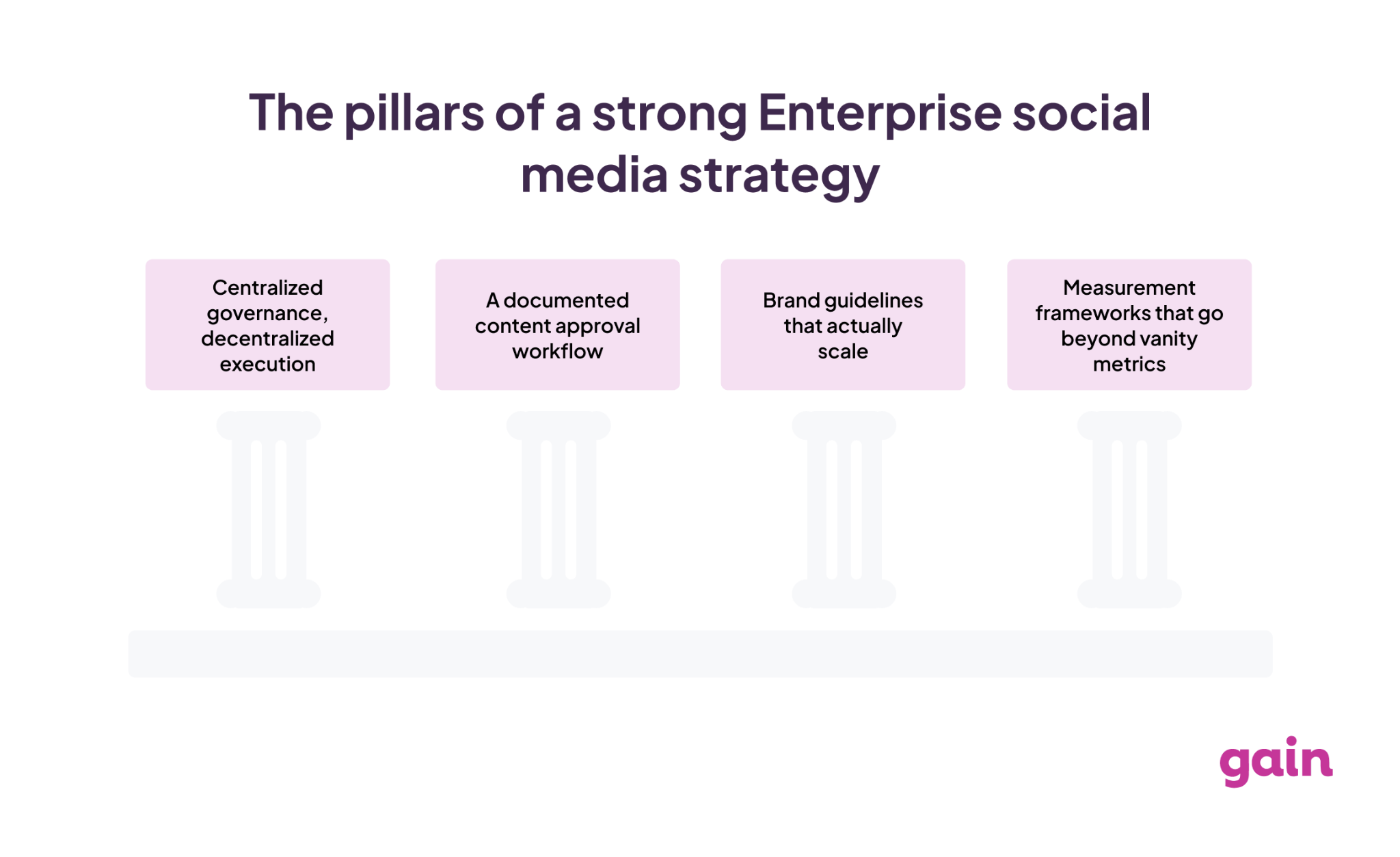
Centralized governance, decentralized execution
The first and most important step is to set the brand standards, tone of voice guidelines, and content policies. These should be at the centre of your social media operations. Then give regional and functional teams the tools and latitude to execute within those guardrails. This is the model that allows a global brand to feel local without going off-brand.
The key is to make the guardrails practical (and not restrictive). For example, local teams should know exactly what they can adapt, what needs approval, and where the brand has zero flexibility. Give them clear examples of:
- Approved localized content
- Escalation paths for sensitive topics
- Reusable campaign frameworks that they can tailor
A documented content approval workflow
Every piece of content that goes out under a major brand name should move through a defined process: creation, internal review, compliance check, sign-off, and scheduling. When that process is documented and followed consistently, you’ll avoid errors. And, as a result of that, your content quality will go up. If you don’t define this process, things will start to fall through the cracks really quickly.
A strong workflow should be simple enough that people actually use it, but detailed enough to remove guesswork. Define who owns each stage, how long reviews should take, and what happens when content is urgent. For example:
- Low-risk content can follow a lighter approval route
- Campaign launches may need brand, legal, and leadership review
- Social media crisis or sensitive posts should have a fast-track escalation process
Brand guidelines that actually scale
Guidelines and social media policies that live in a PDF no one reads aren’t guidelines. Enterprise teams need accessible, living documents that content creators can reference quickly, along with templates and approved marketing asset libraries that make it easy to stay on-brand without starting from scratch every time.
The best enterprise guidelines are built for daily use. Break them into clear sections for voice, visuals, accessibility, platform-specific rules, and do/don’t examples. Make them searchable, easy to update, and connected to your content tools where possible. Include ready-made caption formats, image specs, campaign templates, and approved messaging blocks so teams can move faster while still producing consistent, high-quality work.
Measurement frameworks that go beyond vanity metrics
The fourth pillar is all about metrics. Likes and follower counts don’t tell a useful story at the enterprise level. Define your social media KPIs that connect social activity to business outcomes: share of voice, website traffic from social, lead generation, sentiment trends, and customer retention signals.
The strongest measurement frameworks separate activity metrics from impact metrics. Engagement can show whether content is resonating, but leadership also needs to see how social supports pipeline, reputation, customer experience, and market insight.
Real-world Enterprise Brands Nailing Their Social Media Strategy
Theory aside, let’s look at some real-world examples of enterprise social media strategies that work especially well.
Salesforce
Salesforce has built one of the most sophisticated enterprise social media operations in the B2B world, and a big part of their success comes down to employee advocacy. Rather than relying solely on brand channels, Salesforce has turned its workforce into a network of thought leaders. Their social presence spans LinkedIn, X (Twitter), and YouTube, and is built around education, community, volunteering, and consistent storytelling around customer success. They also don’t shy away from posting humorous content every now and then, which makes the brand even more relatable.
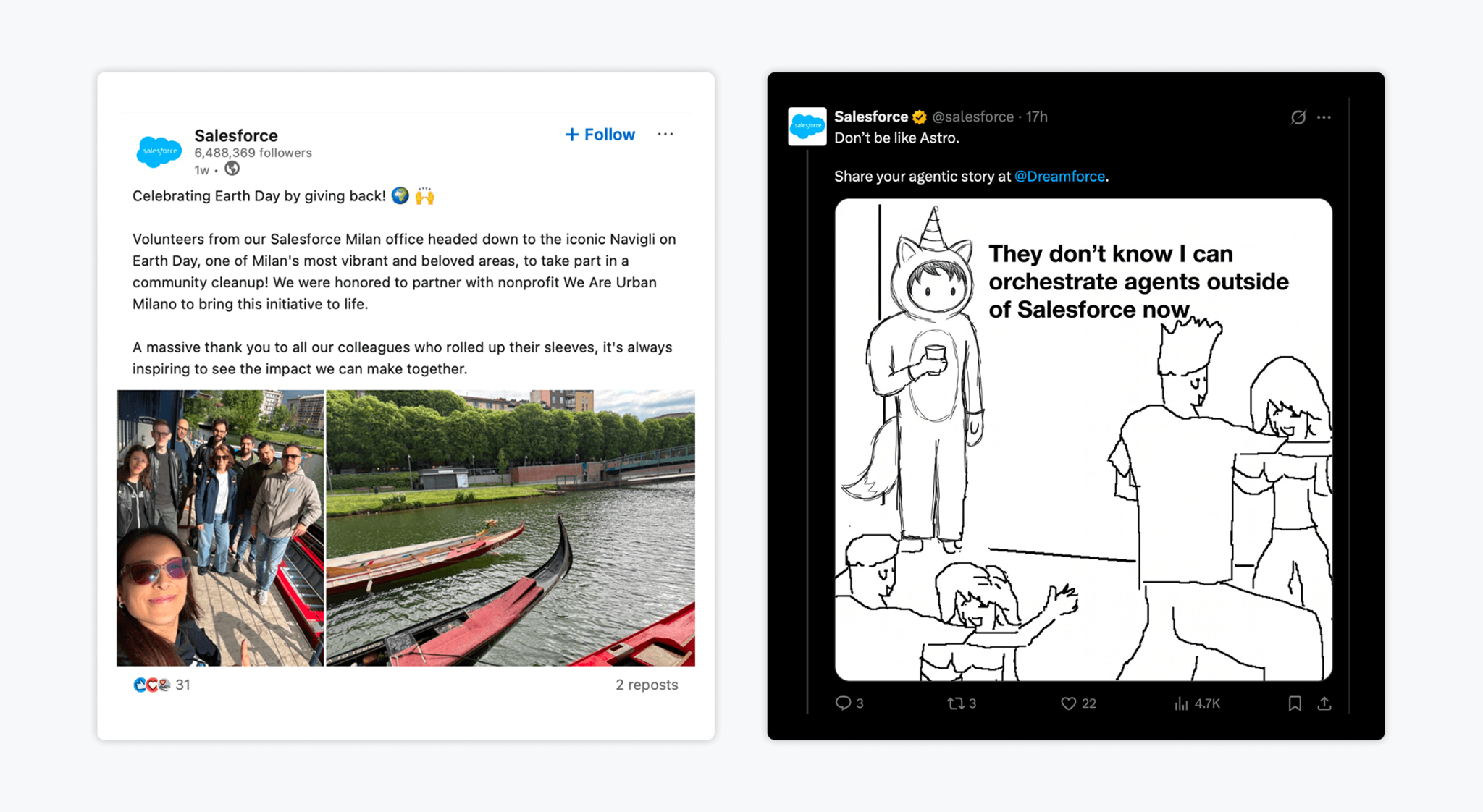
What’s also quite interesting about Salesforce’s social strategy is that they invest heavily in live event coverage and executive thought leadership, giving their social presence depth and authority that a purely promotional approach could never achieve.
Mastercard
For a financial services brand operating in a heavily regulated space, Mastercard’s social media presence is surprisingly human. They’ve built a strategy centered around three things:
- Cultural relevance
- Cause-driven storytelling
- Consistent visual identity that travels well across platforms like Instagram and LinkedIn
📖 Related Read: What to Post and How to Grow a LinkedIn Company Page
In addition, their long-running “Priceless” brand platform has translated remarkably well to social, allowing them to show up in cultural conversations, from music sponsorships to sustainability campaigns, without ever feeling out of place.
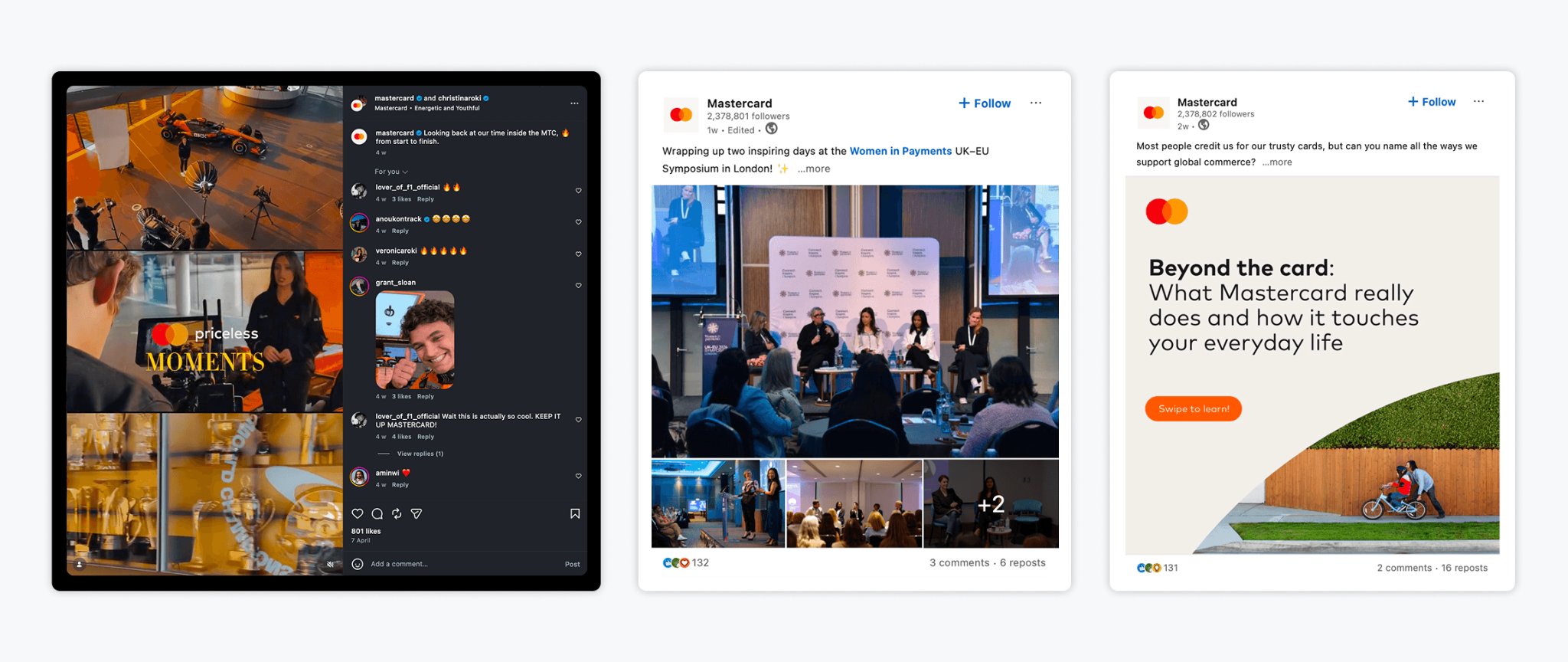
What makes Mastercard worth studying is how they maintain brand consistency across a genuinely global operation. Every market executes differently, but the visual language, tone, and core brand values remain immediately recognizable.
Aflac
A global insurance brand, Aflac, is another interesting enterprise example. Why? Well, because they have their own duck mascot that they use to stay memorable and approachable on social.
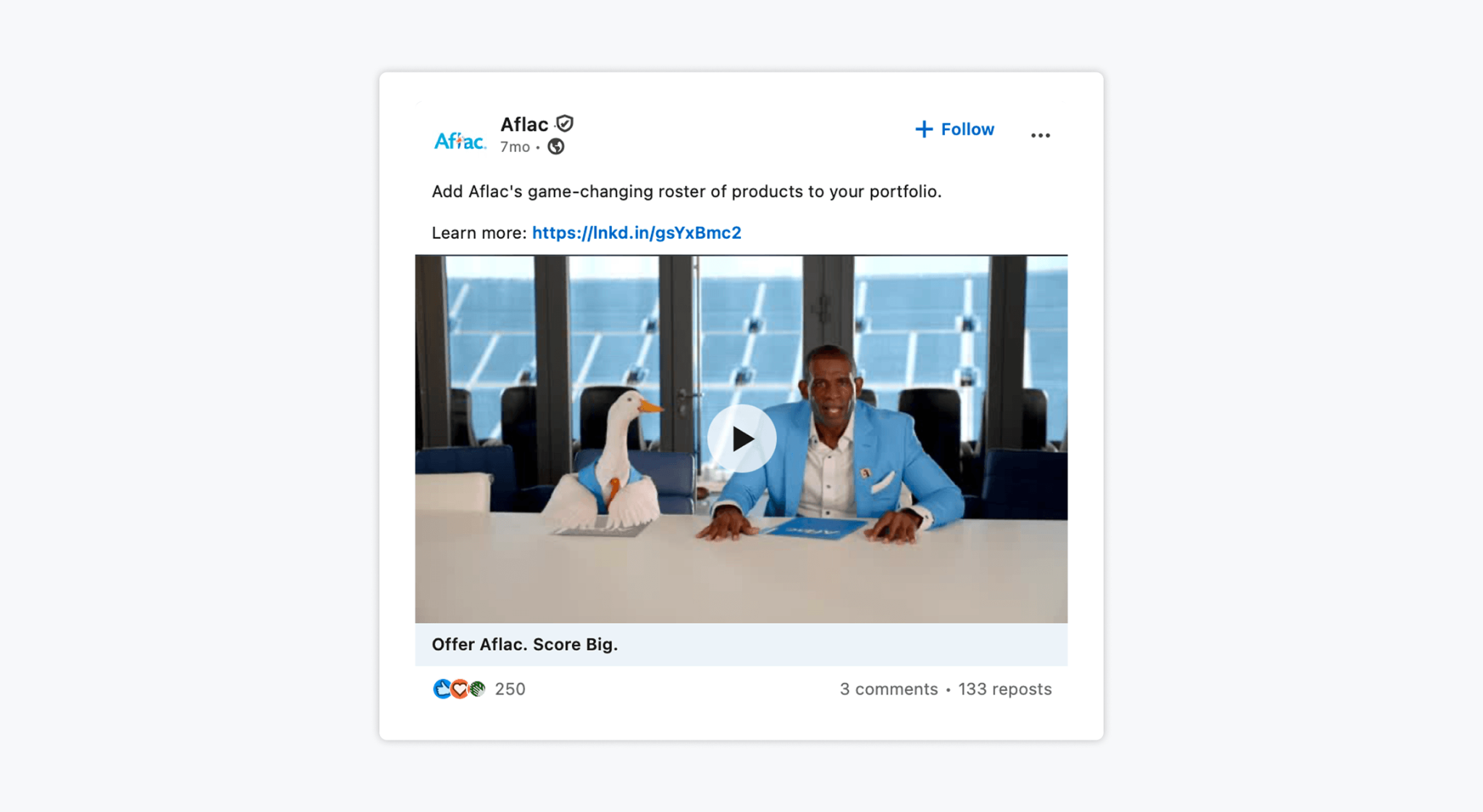
Aflac has built a surprisingly warm, cause-driven social presence, particularly around their childhood cancer charity work, which gives the brand genuine emotional depth beyond the product. Good example of an enterprise insurance brand using social for something beyond promotion.
The Backbone of a Solid Enterprise Social Media Strategy? Compliance and Streamlined Content Approvals
No enterprise social strategy works without proper compliance guardrails. The bigger the brand, the higher the stakes, and the more important it is that every piece of content goes through the right checks before it goes live.
For regulated industries like finance and insurance, this is non-negotiable. Even for brands that aren’t subject to strict legal content requirements, the reputational risk of an unapproved post going out at scale is very real. A single misstep can land in the press within hours.
Getting compliance right means building it into the workflow, not adding it as an afterthought at the end. That means defined review stages, clear stakeholder accountability, and a system that makes it easy for legal, brand, and regional teams to give feedback without creating bottlenecks.
A social media content approval tool like Gain can help you stay compliant without slowing your team down. Gain’s automated content approval workflows route content to the right stakeholders at the right time, keep a detailed time-stamped log of every revision, change request, and sign-off, and send automatic reminders so nothing gets stuck waiting in someone’s inbox.
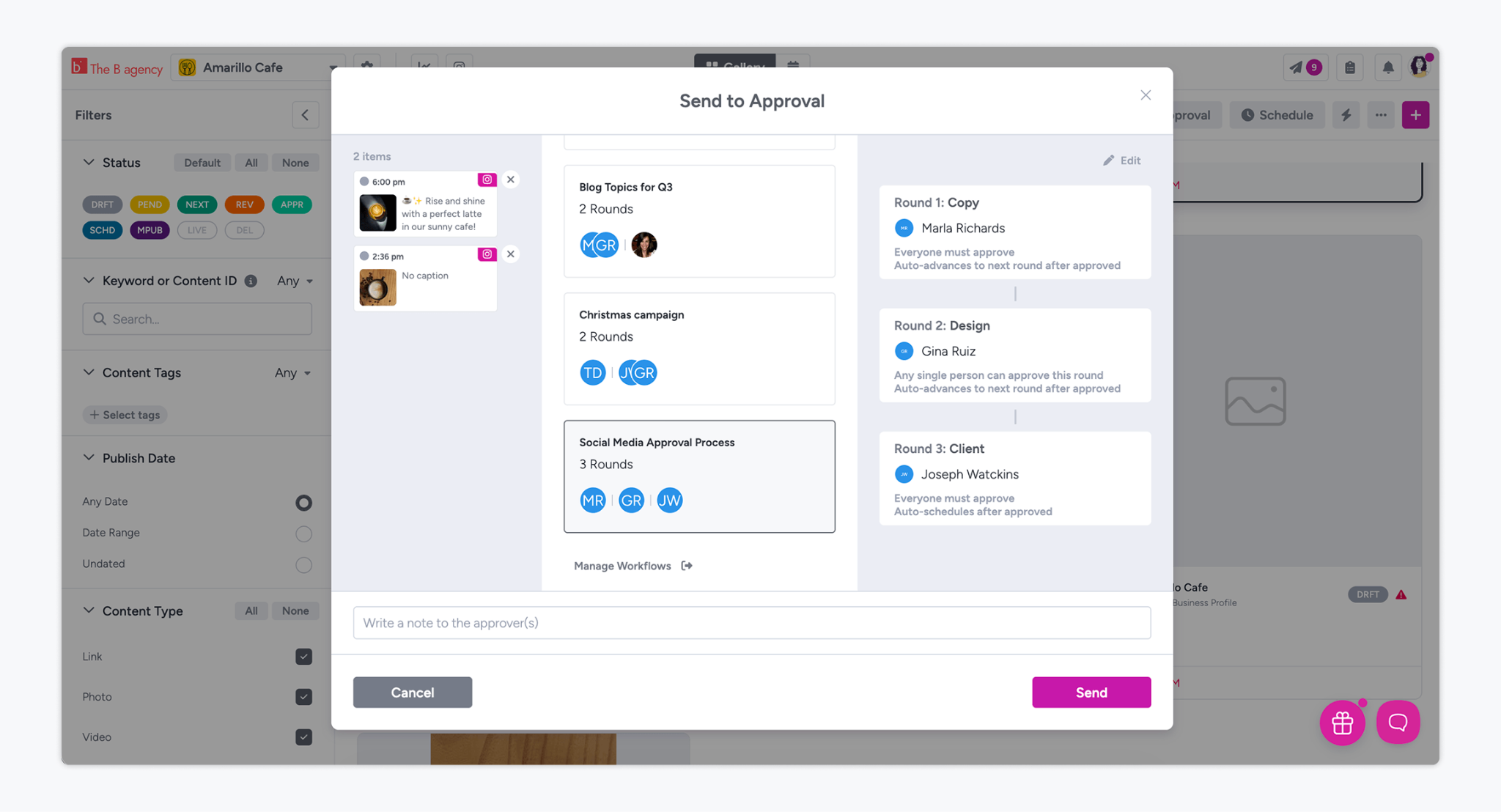
Every piece of content has a clear, auditable trail from creation to publication, which is exactly what regulated industries need and what every enterprise team deserves.
Common Enterprise Social Media Challenges (and How to Solve Them)
Even well-resourced teams run into the same friction points. Here are three of the most common, and what to do about them.👇
- Inconsistent messaging across regions. When regional teams create content independently without clear guidelines or visibility into what other markets are publishing, brand voice drifts fast. The fix is a centralized brand hub with accessible guidelines and approved templates that teams can adapt rather than create from scratch.
- Slow approval cycles stalling content. Multi-layer content approvals are necessary, but they don’t have to be slow. Defining clear timelines for each review stage, limiting unnecessary stakeholders, and using a tool like Gain that automates follow-ups and tracks the status of every piece of content can cut approval time significantly.
- No visibility across accounts. When you’re managing 20 or 30 social accounts, knowing what’s live, what’s pending, and what’s scheduled across all of them in real time is critical. A shared content calendar with account-level visibility is the baseline requirement for any enterprise social operation.
💡Pro tip: The fastest way to solve all three of these challenges at once is to consolidate your workflow into one platform. When content creation, stakeholder approvals, and publishing all live in the same place, visibility improves automatically, and approval bottlenecks become easier to spot.
FAQs
Enterprise social media management refers to the strategies, processes, and tools large organizations use to manage their social media presence at scale. This typically involves multiple teams, accounts, and content approval layers across different regions or business units, all working within a centralized governance framework to maintain brand consistency and compliance.
The most effective approach is centralized governance with decentralized execution. Global brand standards, tone of voice guidelines, and content policies are set at the corporate level and communicated clearly. Regional and functional teams then execute within those guardrails, using approved templates and asset libraries to stay on-brand while adapting content for their specific audiences.
It varies widely, but enterprise social media teams are often larger than people assume. A mid-sized enterprise might have a core social team of 5 to 10 people, plus regional managers, content creators, a legal reviewer, and external agency support. At larger organizations, the number of people with some involvement in social content can run into the dozens.
Wrapping Up
Enterprise social media at its best is organized, consistent, compliant, and genuinely engaging. It requires the right strategy, clear internal processes, and a team that has the tools to execute without getting buried in admin work.
The brands doing it well, like Salesforce, Mastercard, and Adobe, have built systems that allow great content to move efficiently from idea to published post, at scale, without losing quality or consistency along the way.
If you’re managing social media content across a large team or multiple brands, Gain is built for exactly this kind of operation. Gain offers dedicated workspaces for each brand or account, automated multi-stakeholder approval workflows, and a publishing calendar that keeps every team aligned.