
If you’re an agency working with multiple clients, you know too well that managing feedback is the hardest part of the job.
On one side you have your own team. Copywriters, designers, a strategist, an account lead, all with notes on the same asset. On the other side you have the client, who you send assets to for feedback and approval, usually near the end (and usually with a deadline already breathing down everyone’s neck).
Here’s how to get those feedback loops under control, internally and externally, so content stops stalling between the people who have to approve it.
What a Marketing Feedback Loop Actually Is
A marketing feedback loop is the process an agency uses to collect, organize, and act on input from everyone involved in a client project. Internal stakeholders may include the agency’s account managers, strategists, designers, copywriters, and creative directors. They review the work to check its quality, confirm it follows the agreed strategy, and make sure it’s ready to present to the client.
External stakeholders usually include the client’s marketing team, senior decision-makers, legal or compliance departments, product experts, and other partners. They may comment on brand accuracy, business goals, messaging, factual details, or regulatory requirements.
It’s called a loop because feedback often goes through several rounds. The agency shares the work, stakeholders provide comments, and the agency makes revisions before sending it back for another review. The process continues until the necessary stakeholders are aligned and the marketing asset is approved for publication or launch.
Internal and External Feedback Break in Different Ways
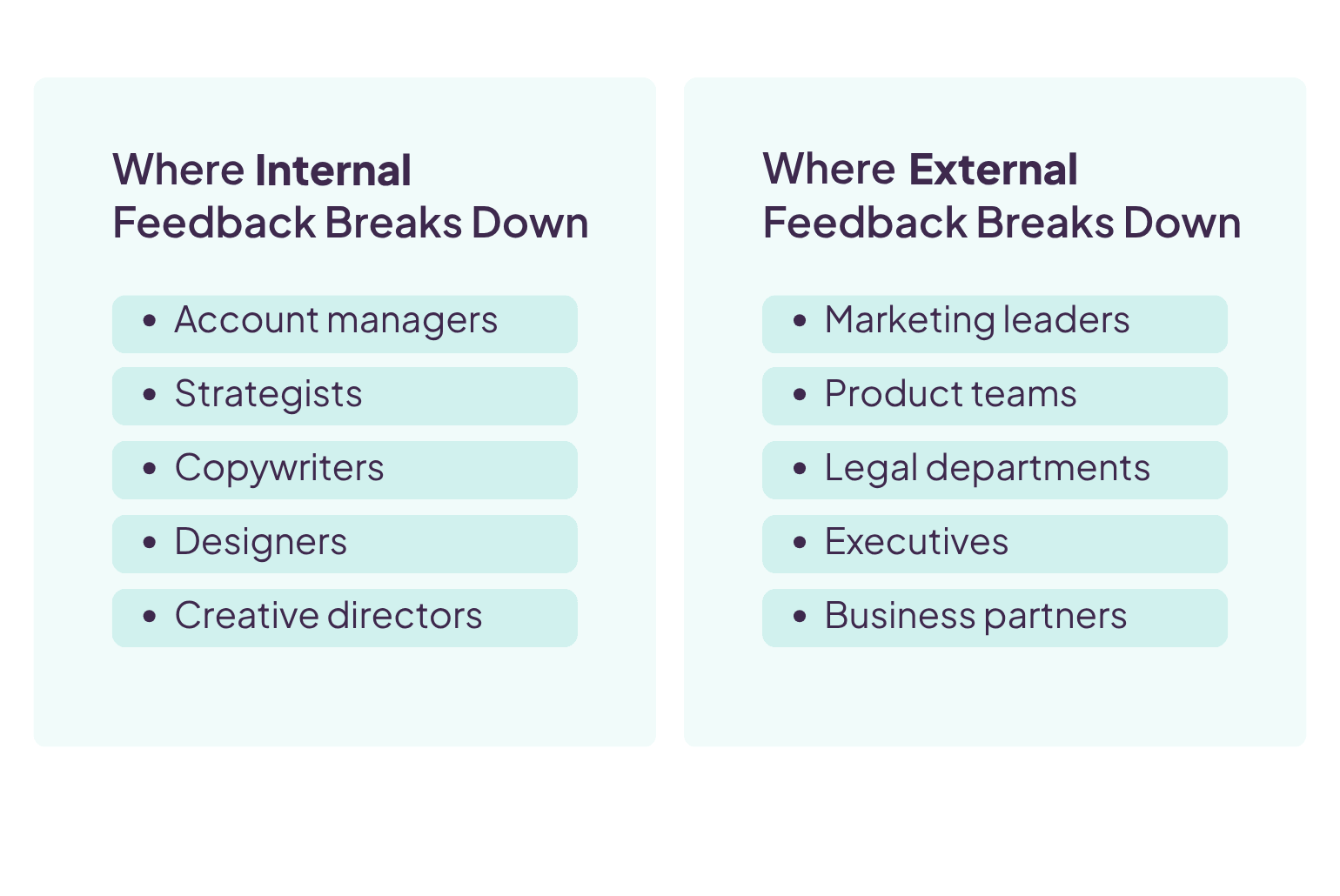
Agencies receive feedback from both their own teams and the client’s stakeholders, and that feedback can break in different ways.
Where Internal Feedback Breaks Down
Internal feedback comes from people within the agency, such as:
- Account managers
- Strategists
- Copywriters
- Designers
- Creative directors
Because these teams work closely together, it’s easy to assume everyone understands the brief, the client’s priorities, and their role in the review process.
That assumption can lead to unclear or conflicting comments. A strategist may suggest changing the core message, while a creative director focuses on presentation and an account manager requests edits based on a recent client conversation. If these comments aren’t discussed and consolidated, the person making the revisions is left to decide which direction to follow.
Internal reviews can also become a source of unnecessary delays. Too many reviewers, unclear responsibilities, and feedback shared across email, chat, documents, and project management tools can make it difficult to know which comments are current. Team members may also spend time polishing small details before the overall direction has been approved.
Where External Feedback Breaks Down
External feedback usually comes from clients and their wider stakeholder groups, including:
- Marketing leaders
- Product teams
- Legal departments
- Executives
- Business partners
These reviewers may have limited knowledge of the agency’s process or the reasoning behind a creative decision.
Problems often start when the main client contact sends the work to additional stakeholders without clarifying what kind of feedback is needed. One reviewer may assess the strategy, another may rewrite individual sentences, and a senior leader may request a new direction late in the process. The agency then receives a collection of comments that may conflict with one another or fall outside the agreed scope.
Delays are another common issue. External reviewers have their own priorities, so feedback may arrive late, in separate batches, or after revisions have already started. Vague comments such as “make it pop” or “this doesn’t feel right” can create further back-and-forth because the agency must first work out what the stakeholder wants.
5 Steps to Creating a Smoother Stakeholder Feedback Process
So, how do you go about fixing broken feedback loops? The following five steps can help you collect clearer input, reduce unnecessary back-and-forth, and keep projects moving toward approval.👇
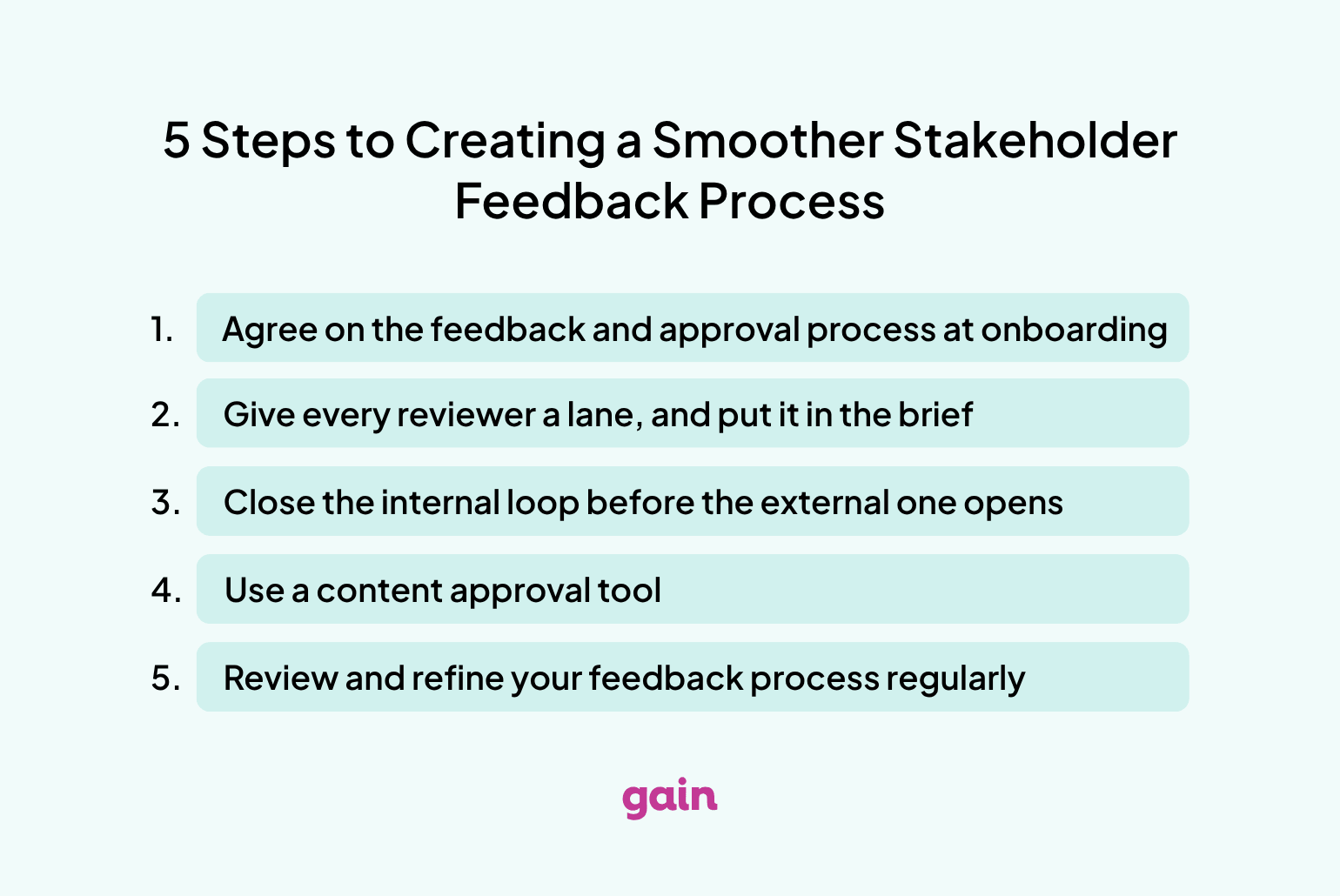
1. Agree on the Feedback and Approval Process at Onboarding
The best time to discuss the feedback and approval process is when signing a contract with a client or during onboarding.
So, before work begins, document how the feedback process will work in the statement of work (SOW) or client onboarding materials. Keep it short and specific so both your agency and the client understand their responsibilities, deadlines, and what happens if the process falls behind.
Include:
- The designated reviewer and approver: Name the people responsible for reviewing and approving the work instead of listing an entire department.
- The number of revision rounds: State how many rounds are included in the project scope and how additional revisions will be handled.
- Feedback and revision deadlines: Specify how long the client has to provide feedback and how long your agency has to complete the requested changes.
- The process for missed deadlines: Explain whether a delayed response will move the publication date or whether the content will be considered approved and published as submitted.
2. Give Every Reviewer a Lane, and Put It in the Brief
The brief is where the loop gets designed. Alongside the goal, audience, and key message, name every reviewer and what each of them is actually checking for:
- Brand voice
- Legal claims
- Channel fit
- Factual accuracy
Reviewers with a defined lane give narrow, useful feedback. Reviewers without one comment on everything, because you never told them what their part was.
While you’re at it, separate input from authority. Some reviewers advise and some can block. Clients usually give direction that has to be implemented, while internal stakeholders offer suggestions your team can weigh. Settling that before a disagreement happens is much easier than settling it during one.
3. Close the Internal Loop Before the External One Opens
Never send a client something your own team hasn’t agreed on. If internal feedback is still unresolved when the draft goes out, the client sees the disagreement and gets pulled into settling it, which puts them in the position of making a call you were hired to make.
In practice that means one internal pass with a real cutoff, not a rolling stream of comments that trickles in for three days. Someone, usually the account lead, consolidates everything into a single set of changes, applies them, and only then sends the asset out for client review.
What leaves your team should be one point of view, not three competing ones with a request to pick a favorite. Clients notice the difference, and it changes how they respond.
4. Use a Content Approval Tool
All of the above works in theory. In practice, it lives in someone’s head, gets skipped on a busy week, and falls apart the moment you’re running it across eight clients at once.
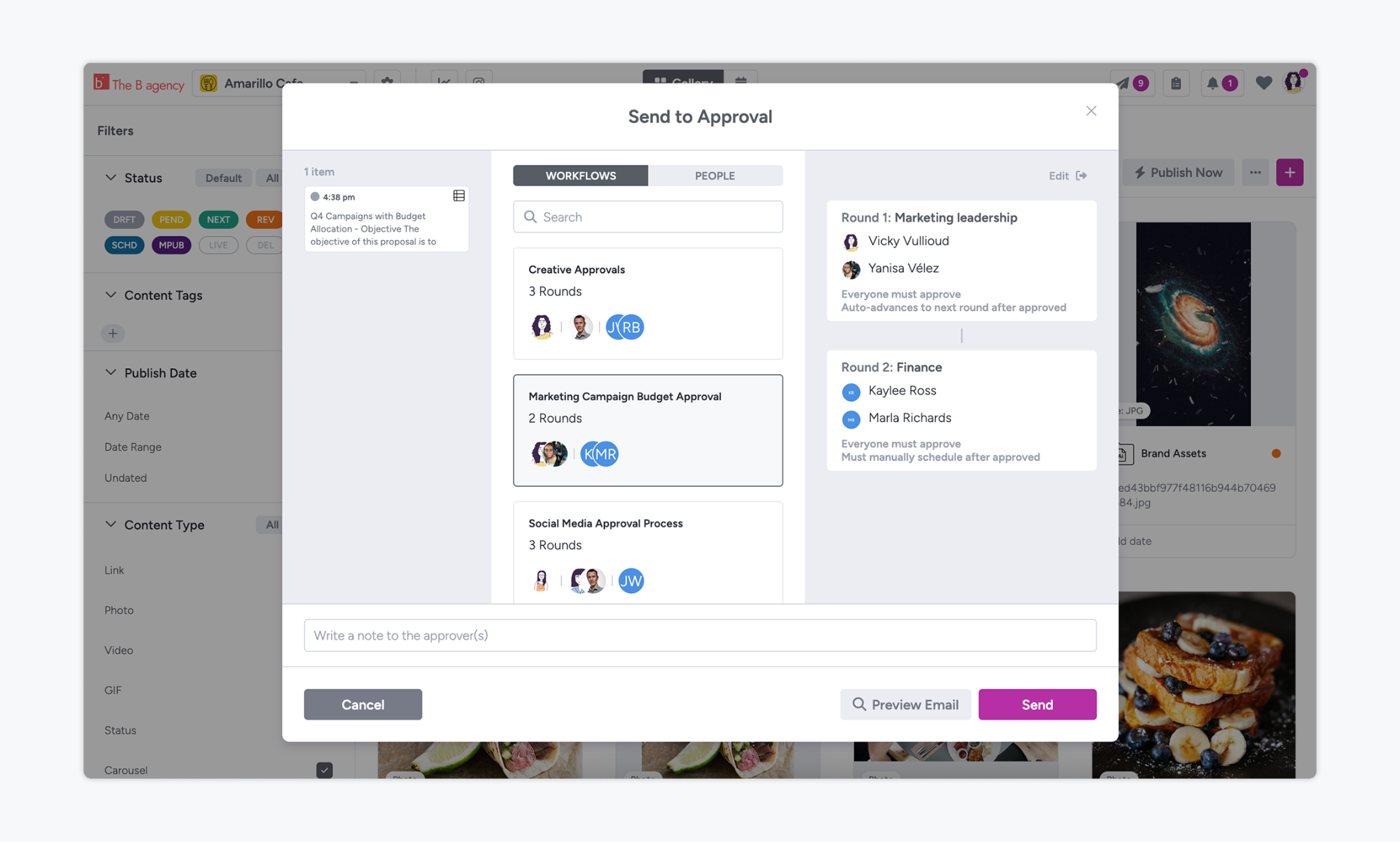
To actually close the feedback loop, you need a content approval tool. These platforms are built to do the parts your team keeps doing manually, such as routing content to the right reviewers in the right order, centralizing all feedback on the asset itself instead of scattered across inboxes, chasing people who haven’t responded, and logging every approval so there’s a record of who signed off on what.
For example, Gain offers a centralized place to approve everything your team creates, from social posts and files to documents, videos, and web content. Here’s how it handles feedback loops:
- Feedback lives on the content, not in people’s inboxes. Reviewers can leave comments on each piece of content, so everyone can see what’s already been raised before they add to it. No duplicate notes, and no two people asking for opposite things without seeing previous inputs.
- Approval flows you define. Content goes to internal reviewers first, then out to the client, so the internal loop genuinely closes before the external one opens.
- No more chasing. Gain notifies the next person when it’s their turn and sends friendly reminders if things stall. Clients get a magic login link and approve in one click, with no account or password to set up.
- A record of every decision. Every change request and approval is logged with a name, and timestamp, and nothing is published without the right sign-offs.
5. Review and Refine Your Feedback Process Regularly
A feedback process that works for one client or campaign may not work for the next. Review it after major projects or once a quarter to identify recurring delays and unnecessary revision rounds.
Look at practical signals, such as:
- How long approvals took
- Where deadlines were missed
- How many revision rounds were needed
- Whether feedback arrived in separate batches
- Was your content approval tool serving you well
Ask your team what slowed them down, then invite the client contact to share what made reviewing difficult on their side. Focus on patterns rather than one-off problems.
Use what you learn to update your SOW, briefs, reviewer roles, deadlines, and approval workflows. Small changes, such as involving legal earlier or shortening the reviewer list, can prevent the same problem from affecting the next project.
Build a Feedback Process That Keeps Work Moving
A strong feedback process gives every stakeholder a clear role, keeps comments in one place, and moves content toward approval without unnecessary delays. Set expectations early, close internal reviews before involving the client, and regularly refine the workflow based on what slows projects down.
The right system makes these practices easier to maintain across multiple clients and campaigns. Gain brings content, comments, revisions, and approvals into one shared workflow, while automatically reminding reviewers when it is their turn to act.
Give Gain a try for free to spend less time chasing feedback and more time delivering work your clients are ready to approve.