
AI was supposed to make your agency more productive. And in some ways, it has. Your team can now create social posts, blog drafts, emails, and campaign assets in a fraction of the time.
But somehow, everyone is still busy. Account managers are chasing client approvals, editors are buried in revisions, and content keeps piling up waiting for someone to review it.
Sound familiar?
If your team is producing more content with AI but struggling to get it approved and published, here are five signs your approval process might not be ready for the increased workload — and what you can do about it.
1. You’re Producing More Content, but Not Publishing More of It
One of the most obvious signs that your content approval process isn’t ready for AI is that you’re creating more content, but not necessarily getting more of it published.
Think about it. AI lets your team create social posts, blog drafts, ad copy, and multiple variations of each much faster than before. But do you actually have enough human hours to review everything, provide constructive feedback, make the necessary changes, and get it all approved?
Your editors, account managers, and clients still have the same number of hours in their day. And if your review capacity stays the same while content production doubles, all you’re doing is creating a bigger pile of drafts waiting for approval.
🛠️ How to fix it: Before ramping up AI content production, figure out how much content your team can realistically review and approve each week. Look at how many pieces make it from draft to publication, rather than just counting how many you’re producing. Then adjust your production targets to match your team’s review capacity, or find ways to simplify the review process without compromising quality.
2. Every Piece of Content Goes Through the Same Lengthy Approval Process
Does a quick Instagram caption you’ve drafted with AI to promote an industry report that you’ve just published really need to go through a three-stage approval process? Probably not.
When you’re producing content at scale with AI, treating every piece of content the same way can waste a lot of time. Not every piece of content requires the same level of scrutiny, and involving multiple stakeholders in every approval can quickly eat into the time your team saves using AI.
A routine social post referencing previously approved messaging is very different from a new campaign making product claims or discussing sensitive industry topics. Yet many agencies send both through the exact same review process.
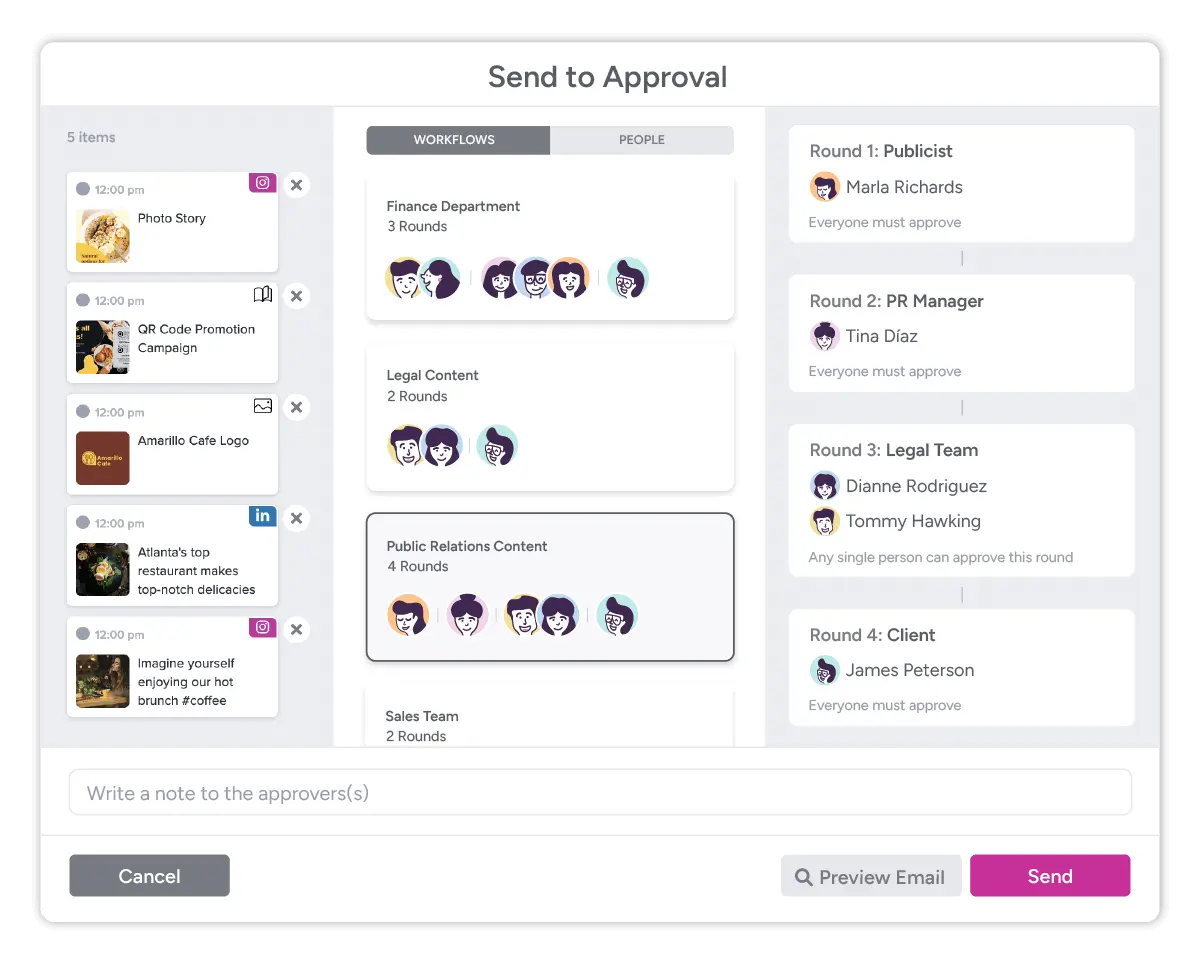
🛠️ How to fix it: Introduce different approval workflows based on content risk, complexity, and whether the messaging has already been approved. For example, repurposing of existing content might only require one internal review and client sign-off, while new campaigns or sensitive claims should go through additional checks. This way, your senior reviewers can focus their attention where it matters most, rather than becoming a bottleneck for every piece of content your agency produces.
3. AI-generated Content Keeps Coming Back With the Same Corrections
Another glaring issue in many agencies’ workflows is that AI-generated content keeps coming back with the same corrections. And often, the problem isn’t the AI itself. It’s the lack of context you’re giving it.
You can’t expect AI to produce great ad copy or a social media campaign from a vague prompt and a few sentences about the client. If it doesn’t know the brand’s positioning, target audience, tone of voice, or campaign objectives, it’s going to produce generic, uninspired content. And your editors and clients will spend hours fixing it.
🛠️ How to fix it: Stop treating prompting as an afterthought. Give AI a proper creative brief, relevant brand voice guidelines, examples of previously approved content, and specific instructions about what the content needs to achieve. Better inputs won’t eliminate the need for human review, but they can dramatically reduce the amount of rewriting your team has to do before a draft is ready for approval.
4. Your Team and Clients Don’t Know How AI Was Used to Create the Content
Using AI to brainstorm a few headline ideas is one thing. Having it write an entire article is another. And the people approving that content deserve to know the difference.
If your editors don’t know how AI was used, how are they supposed to know what needs closer scrutiny? An AI-generated article full of industry statistics and claims requires a very different level of fact-checking than a social caption that AI simply helped polish.
And for agencies, there’s also the question of client trust. You don’t want a client finding out you’ve been using AI extensively on their account when they assumed everything was written from scratch and by humans.
🛠️ How to fix it: Establish clear guidelines for documenting AI use internally and agree with clients on when and how it should be disclosed. Make sure reviewers know how AI was used so they can apply the right checks before approving content.
5. You’ve Invested in AI Content Tools, but Not in Your Approval Tools
Think about how many AI tools your agency has experimented with over the past year. AI writers, image generators, video editors… There’s no shortage of software promising to help your team create more content in less time.
But when was the last time you looked at the tools you’re using to get all that content approved?
If your team is still chasing client sign-offs, piecing together feedback from different places, and manually tracking which content pieces are ready to publish, there’s a good chance your approval process hasn’t caught up with your production capabilities.
🛠️ How to fix it: Give your approval process the same attention you’ve given content creation. For example, a content approval platform like Gain lets you bring social posts, videos, documents, and other marketing content into one place, set up automated approval workflows, and keep track of every revision and sign-off. You can even give clients their own workspaces and let them approve content with a single click, without creating another account.
The bottom line: if you’re serious about scaling content production with AI, your approval tools need to scale with it.
Don’t Let Approvals Cancel Out the Time You’re Saving With AI
AI can save your agency hours of content production work every week. But if those hours are simply being spent chasing approvals, sorting through feedback, and managing endless revisions, what’s the point?
Before you start producing even more content with AI, make sure your approval process can handle it.
Try Gain for free and make sure your approval process is ready for whatever AI helps you create next.